Think of an asset recovery company as a team of financial detectives. Their mission is to legally track down and retrieve assets you've lost, whether they were stolen, misplaced, or locked away. They're the specialists you call when you need to recover anything from cryptocurrency vanished in a scam to business equipment a defaulted partner never returned.
What an Asset Recovery Company Actually Does
At its heart, an asset recovery company exists to turn a devastating financial loss into a potential recovery. But don't mistake them for a simple debt collection agency. Their work is far more intricate, blending deep investigation, asset tracing, and strategic retrieval.
Picture this: you've lost the password to a crypto wallet holding a significant portion of your savings. Or maybe a business partner has disappeared with valuable company property. These are precisely the kinds of messy, high-stakes situations where these experts shine.
Their process is a mix of forensic accounting, digital sleuthing, legal maneuvering, and sharp negotiation. When it comes to digital assets like crypto, that means painstakingly tracing transactions across complex blockchains. For physical assets, it might involve tracking down shipments, poring over ownership records, and even coordinating with law enforcement across different countries.
Navigating Complex Financial Mazes
The real value of a professional recovery firm is its ability to cut through systems designed to be confusing and opaque. Scammers and fraudsters thrive on this complexity, weaving tangled webs to cover their tracks and make it nearly impossible for a victim to recover anything on their own. An asset recovery company brings the specialized tools and hard-won experience needed to unravel it all.
This isn't a niche problem anymore. The global asset recovery services market was valued at around USD 12.5 billion in 2023 and is on track to hit USD 26.8 billion by 2032. As you can see in this detailed report on market trends, this growth shows just how many people and businesses need help from professionals who can get their assets back while navigating a minefield of financial regulations.
The goal isn’t just to find the asset. It's about establishing a clear, legally sound path to return it to its rightful owner. This requires a masterful understanding of both technology and the law, ensuring every move can withstand intense scrutiny.
So, when is it time to call in the pros? Deciding when to hire an asset recovery company often depends on the complexity of the situation and the type of asset involved. Here’s a quick guide to some of the most common scenarios.
When to Hire an Asset Recovery Company
| Situation | Type of Asset | Why You Need a Professional |
|---|---|---|
| Crypto Scams & Hacks | Cryptocurrency (BTC, ETH, etc.) | Experts can trace transactions across blockchains, a skill far beyond the average user. |
| Corporate Fraud | Embezzled funds, stolen data | They perform deep financial forensics to follow the money trail and build a legal case. |
| Locked Digital Wallets | Cryptocurrency wallets, encrypted files | Specialized software and techniques are needed to crack passwords without corrupting the data. |
| Defaulted Agreements | Physical equipment, intellectual property | They navigate the legal complexities of contracts and coordinate asset seizure. |
Ultimately, bringing in a professional firm provides a structured, methodical approach to what is often a chaotic and emotional ordeal. They offer a realistic path to retrieval where you might have thought all hope was lost.
So, What Actually Happens During Asset Recovery?
Hiring an asset recovery company is your first move, but what comes next? It's not a single "aha!" moment. Think of it as a methodical journey, one that takes the chaos of your loss and turns it into a structured, evidence-based investigation with a single goal: getting your funds back.
It all kicks off with an initial consultation. This is where you lay everything on the table—every detail, every suspicion, every piece of data you have. Your recovery partner will gather transaction histories, chat logs, emails, and anything else related to the incident. This isn't just paperwork; it's the foundation for the entire investigation.
This infographic breaks down the typical three-stage flow of a professional recovery.
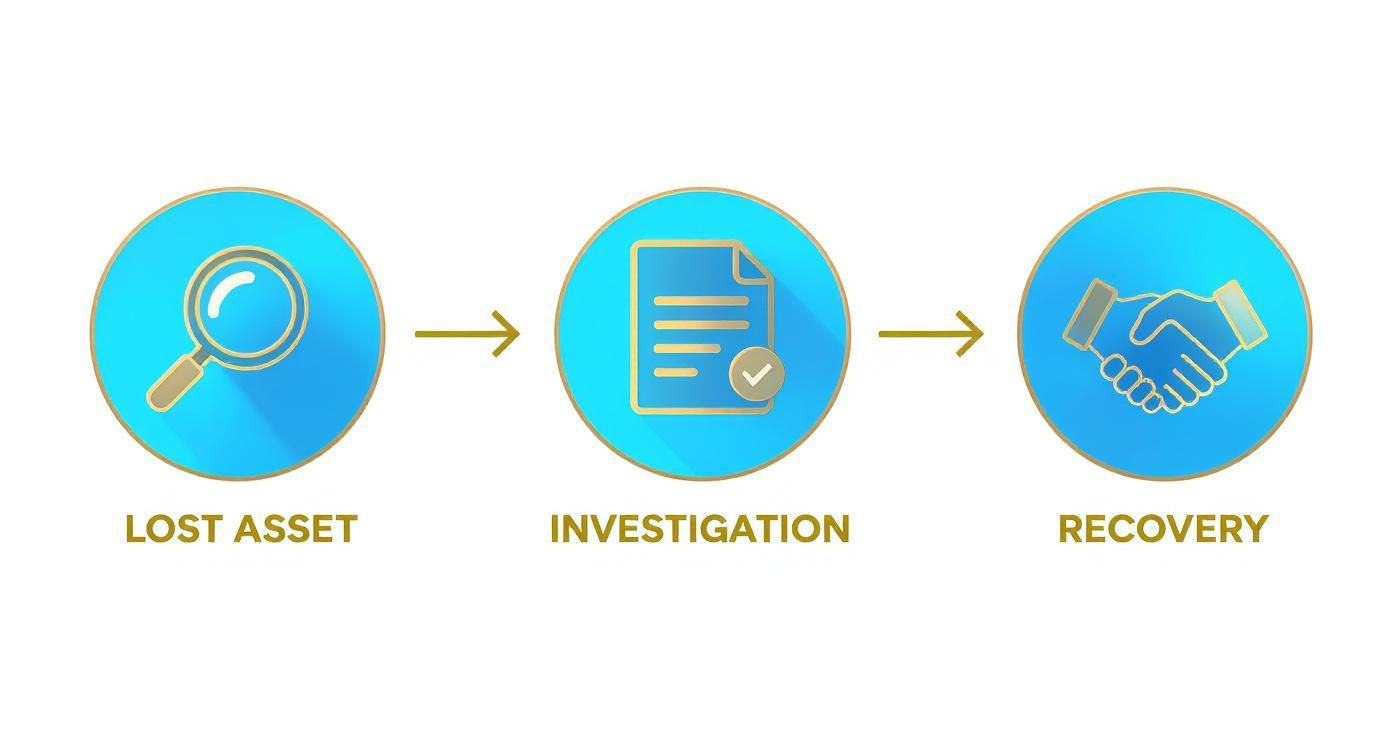
As you can see, it’s a clear progression. The process moves logically from identifying the problem and digging deep into the evidence to, finally, retrieving the assets.
The Investigation Phase
Once all the facts are on the table, the real detective work begins. This is where a top-tier asset recovery firm proves its worth, deploying specialized techniques that fit the specific type of asset you’ve lost.
For traditional assets, this often means forensic accountants combing through bank statements and corporate records to trace money trails. It might also involve legal teams digging into contracts to establish ownership claims or pinpoint breaches, building a rock-solid case for retrieval.
But when it comes to digital assets like cryptocurrency, the playbook is entirely different.
Following the Crypto Trail on the Blockchain
Recovering crypto requires a unique skillset centered on blockchain analysis. Because public blockchains are immutable ledgers, every transaction leaves a permanent digital footprint. Experts know exactly how to follow these breadcrumbs.
It’s a multi-step process:
- On-Chain Tracing: Investigators use powerful analytical software to map the journey of your stolen crypto from one wallet to the next. They’re looking for tell-tale patterns, like funds being split into tiny amounts (dusting) or routed through mixers to throw people off the trail.
- Spotting the "Off-Ramps": At the end of the day, most thieves want to cash out their stolen crypto for fiat currency. Investigators keep a sharp eye out for transactions moving to known crypto exchanges—these are the "off-ramps" where digital money meets the traditional banking system.
- Working with Exchanges: Once funds hit an exchange, the recovery company engages with that platform's compliance team and, often, law enforcement. By presenting a clear, evidence-backed map of the funds' movement, they can formally request a freeze on the account holding your stolen crypto.
This methodical tracing is everything. A strong, evidence-backed trail is often the only way to compel an exchange or legal authority to act. Without it, the funds can disappear into the global financial system forever.
Now, if you're dealing with a locked wallet because of a forgotten password, the approach is different but just as technical. In these situations, specialists use advanced crypto recovery software to systematically try millions or even billions of password combinations without corrupting the wallet file. It’s an AI-driven brute-force method that dramatically improves the odds of getting you back in.
Whether it’s forensic accounting or blockchain sleuthing, the investigation phase is all about building an undeniable case. This painstaking work paves the way for the final step: the recovery itself, where legal pressure, negotiation, or technical skill brings your assets back home.
How to Choose the Right Recovery Partner
Picking the right asset recovery partner is probably the single most important decision you'll make. It’s a crowded field, and for every real expert, there are a dozen outfits making promises they can't keep. You have to vet them carefully. Think of it like hiring a surgeon—you wouldn’t let them near you without scrutinizing their qualifications, track record, and methods first.
So, where do you start? Look at their experience. A legitimate company will have a verifiable history of successful recoveries, especially with cases that look a lot like yours. Don't be shy about asking for the details.
Evaluating Potential Partners
A firm's expertise should be obvious in how they talk about their work. Ask them direct questions about their tools and techniques. If you're dealing with digital assets, this means making sure they're fluent in blockchain analytics and have established relationships with the major crypto exchanges.
Here are a few other key things to look for:
- Specialization: Do they really know their stuff when it comes to your specific asset? Whether it’s Bitcoin, corporate funds, or even physical equipment, specialization matters.
- Transparency: Are they upfront about their process, the potential roadblocks, and how they charge? A company you can trust will set clear, realistic expectations from the get-go.
- Reputation: Do some digging. Look for online reviews, client testimonials, and any professional accreditations. A solid reputation is earned through consistent, ethical work.
A huge sign of a professional asset recovery company is a clear, written agreement. This contract should spell out the scope of work, all fees, estimated timelines, and how they'll protect your confidentiality. Never, ever move forward on a verbal promise alone.
This kind of due diligence is more critical than ever. The global asset recovery services market was valued at USD 6.44 billion in 2022 and is expected to balloon to USD 12.26 billion by 2030. This boom, driven in part by the massive need to manage retired IT assets, means a lot of new players are jumping in. You can discover more insights about these industry trends to get a better handle on the changing market.
Key Questions to Ask Any Firm
Before you sign anything, have a checklist of questions ready. How they answer—or don't answer—will tell you everything you need to know about their competence and integrity.
- What’s your success rate with cases like mine? No one can guarantee a win, but they should be able to share anonymized case studies or stats that show they know what they're doing.
- Can you walk me through your fee structure? Get a complete breakdown. Are there upfront costs? Do they work on a contingency fee (a percentage of what’s recovered)? Or do they charge by the hour? Hidden fees are a massive red flag.
- How will you keep me in the loop? Communication is everything. A professional firm will have a clear system for giving you regular progress reports so you’re not left in the dark.
- How do you protect my data? In this day and age, this is a deal-breaker. They must have rock-solid security measures in place to keep your sensitive information safe.
Choosing the right partner can turn a chaotic, stressful mess into a structured, professional process. For those struggling with a locked crypto wallet, a specialized wallet recovery service that uses advanced, AI-driven methods can be a game-changer, bringing together the right technical skills with the security protocols you need.
Spotting Red Flags and Recovery Scams
When you're reeling from a major financial loss, the stress and desperation can cloud your judgment. Unfortunately, this is exactly what scammers count on. They’ve learned to pose as legitimate asset recovery companies, ready to exploit your hope and hit you a second time.
Knowing the warning signs is your absolute best defense.
The most obvious red flag? A demand for a huge upfront fee. While some genuine firms might ask for a modest, transparent retainer, scammers will demand thousands before lifting a finger. They'll dress it up with official-sounding terms like a "tax," "processing fee," or even a "wallet synchronization cost," all designed to sound legitimate while they drain your account.
Another dead giveaway is an unrealistic guarantee of success. Let’s be clear: no professional can promise a 100% recovery rate. The process is far too complex, with countless variables well outside anyone's control. If someone is making absolute promises, they're not selling a service—they're selling false hope.
Common Tactics of Recovery Scams
Watch out for high-pressure sales tactics. Scammers thrive on creating a sense of panic, telling you to pay right now or your assets will be gone for good. A real expert will give you the time and space you need to review their terms and make a clear-headed decision.
And be especially suspicious of anyone who contacts you out of the blue. If a stranger messages you claiming they've found your lost funds and can get them back for a fee, it’s almost certainly a scam.
One of the most cynical ploys is the "recovery room" scam. This is where the original fraudsters—or their partners—circle back and contact you, this time disguised as a helpful recovery agency. They use the details they stole from you in the first place to sound incredibly convincing, all in an effort to trick you into sending them even more money.
To keep yourself safe, you need to understand the stark difference between a real service and a fraudulent operation.
Legitimate Service vs Recovery Scam
The table below breaks down the key distinctions. Knowing what to look for can make all the difference in protecting yourself from further loss.
| Characteristic | Legitimate Asset Recovery Company | Recovery Scam / Red Flag |
|---|---|---|
| Payment Structure | Primarily contingency-based or transparent, modest retainers. | Large, mandatory upfront fees before any work begins. |
| Promises Made | Sets realistic expectations and explains potential challenges. | Guarantees 100% success and makes absolute promises. |
| Communication | Professional, patient, and provides clear written agreements. | Uses high-pressure tactics and creates false urgency. |
| Verification | Has a verifiable track record, physical address, and professional online presence. | Operates anonymously, often through social media or encrypted chat apps. |
At the end of the day, a trustworthy asset recovery company operates with complete transparency. They will provide a clear contract, explain their methods without hiding behind jargon, and will never, ever pressure you into a decision.
Taking a little extra time to verify their credentials is the single most important step you can take. It’s what ensures you don’t become a victim twice.
What’s This Going to Cost? And How Long Will It Take?
When you’re trying to get your assets back, two questions are always front and center: "How much?" and "How long?" There’s no simple, one-size-fits-all answer. The cost and timeline are tied directly to how complex your situation is, so getting your expectations straight from the start is key.
Think of it like calling a plumber. A leaky faucet is a quick, predictable fix. But if that leak is a symptom of a busted pipe hidden deep in your foundation, you're looking at a much bigger, more involved project. Asset recovery is the same—the messier the problem, the more time and resources it’s going to take to sort out.
This isn’t a small niche, either. The global asset recovery market was already worth USD 10.6 billion back in 2021 and is expected to hit USD 14.7 billion by 2025. That growth, especially in North America, shows just how many people need this kind of expert help. If you're curious about the numbers, you can read the full research on the asset recovery market to see the scale of the industry.
How Companies Typically Charge for Recovery
You'll run into a few common fee structures when you start looking for help. It’s important to understand them so you can find a partner whose interests are aligned with yours.
- Contingency Fee: This is the most popular model by far. The company takes a percentage of whatever they recover for you. The big plus here? You don't pay a dime unless they succeed. It completely minimizes your risk.
- Flat Fee: For more straightforward jobs, like cracking a forgotten wallet password, some firms will just charge a fixed price. It’s clean, simple, and you know exactly what you’re paying from day one.
- Hourly Rate: This is less common for standard recovery cases. You’ll usually see this model pop up in really complex investigations or if the firm needs to act as an expert witness in a court case.
A contingency model says a lot. When a company is willing to put their own skin in the game—investing their time and money with no guarantee of a payday—it shows they’re confident they can actually get the job done.
Setting a Realistic Recovery Timeline
Patience is a virtue in this line of work. Everyone wants a fast win, but the reality is that timelines can stretch from weeks to well over a year, depending on the details.
A simple, local case might wrap up in just a few weeks. But things get complicated fast. For instance:
- A crypto recovery where funds were laundered through multiple international exchanges could easily take over a year. You’re dealing with different legal systems, uncooperative platforms, and a ton of red tape.
- Any case that ends up in court or requires deep forensic accounting will also move at the speed of the legal system, which is notoriously slow.
A good, trustworthy recovery company will give you a clear, honest timeline after they’ve looked at your case. They’ll point out the roadblocks ahead and keep you in the loop every step of the way. You should never feel like you’re in the dark, even when the process feels like it's dragging on.
The Future of Asset Recovery Is Already Here

Forget the old-school image of an investigator hunched over dusty ledgers. That world is fading fast. Today, technology is completely changing the game, giving modern firms a massive advantage in tracking down and clawing back lost funds—especially in the tangled web of digital assets.
Leading this charge are artificial intelligence (AI) and machine learning. These aren’t just trendy terms; they're powerhouse tools that sift through enormous datasets at speeds no human team could ever hope to match. This raw computational power is what makes tracing stolen crypto possible.
Instead of just following one transaction at a time, AI algorithms can spot faint, interconnected patterns across thousands of blockchain transactions at once. This lets an asset recovery company expose sophisticated laundering schemes that used to be virtually impossible to unravel.
How Automation and Efficiency Drive Investigations
This technological shift goes way beyond just tracing. Automation is sharpening the entire investigative process, dramatically improving both speed and the odds of a successful recovery.
Here’s where these advanced tools really make a difference:
- Pattern Recognition: AI can instantly flag suspicious activity, like funds being bounced through dozens of brand-new wallets—a classic obfuscation tactic that’s incredibly tedious to track by hand.
- Predictive Analysis: By analyzing data from past scams, machine learning models can often predict where stolen funds are likely to end up next, giving investigators a critical head start.
- Data Correlation: Sophisticated software can cross-reference blockchain data with other intelligence, helping to link anonymous crypto addresses to real-world individuals or groups.
It might sound counterintuitive, but with the right tech, virtual assets can actually be easier to trace and recover than traditional ones. Public blockchains are immutable, real-time ledgers, and when you combine that with powerful analytics, you have a recipe for rapid tracing.
This all means that cases once written off as hopeless are now very much in play. An expert asset recovery company armed with AI can process information with greater accuracy and build ironclad, evidence-backed cases for law enforcement. We're in a new era where computational power is the key to turning digital dead ends into successful recoveries.
Got Questions? We've Got Answers
Stepping into the world of asset recovery can feel a bit overwhelming. Let's clear up some of the most common questions people have before they decide to work with a professional service.
Can Stolen Crypto Actually Be Recovered?
You'd be surprised how often the answer is yes. It’s not magic, though. A skilled recovery company uses sophisticated blockchain tracing tools to follow the money, creating a digital breadcrumb trail. From there, they often coordinate with law enforcement and crypto exchanges to freeze and ultimately claw back the funds.
The key is moving fast. Success really depends on how quickly you act and how tangled the theft is. But be warned: anyone promising a 100% recovery rate is waving a massive red flag.
How Is This Different from a Debt Collector?
They're worlds apart. Think of an asset recovery company as a highly specialized investigator. Their entire job is to trace and retrieve specific, identifiable property you've lost—whether that's crypto from a hack or physical equipment that's gone missing.
A debt collection agency, on the other hand, is just trying to get a bill paid. Their focus is purely on settling a financial obligation, not on finding and returning a specific asset.
How Long Does This Whole Process Take?
Honestly, it varies wildly. A straightforward case, like cracking a locked wallet where you still have some password hints, might just take a few weeks.
But a complex international crypto theft? One that involves sophisticated laundering tactics and bounces across multiple countries? That could easily stretch out for a year or more. Any reputable company will look at the specifics of your situation and give you a realistic timeline upfront.
If you're locked out of your crypto wallet because of a forgotten password or a corrupted file, don't write it off just yet. Wallet Recovery AI uses advanced, AI-driven techniques to help you securely and discreetly get back into your accounts. Learn how our specialized service can help you today.
Leave a Reply