
A stainless steel billfold wallet takes the classic folding design we all know and rebuilds it using tough, industrial-grade stainless steel. It’s a serious upgrade in durability and security over traditional leather, giving you a sleek and incredibly tough way to carry your essentials.
A Pocket-Sized Vault for Modern Needs
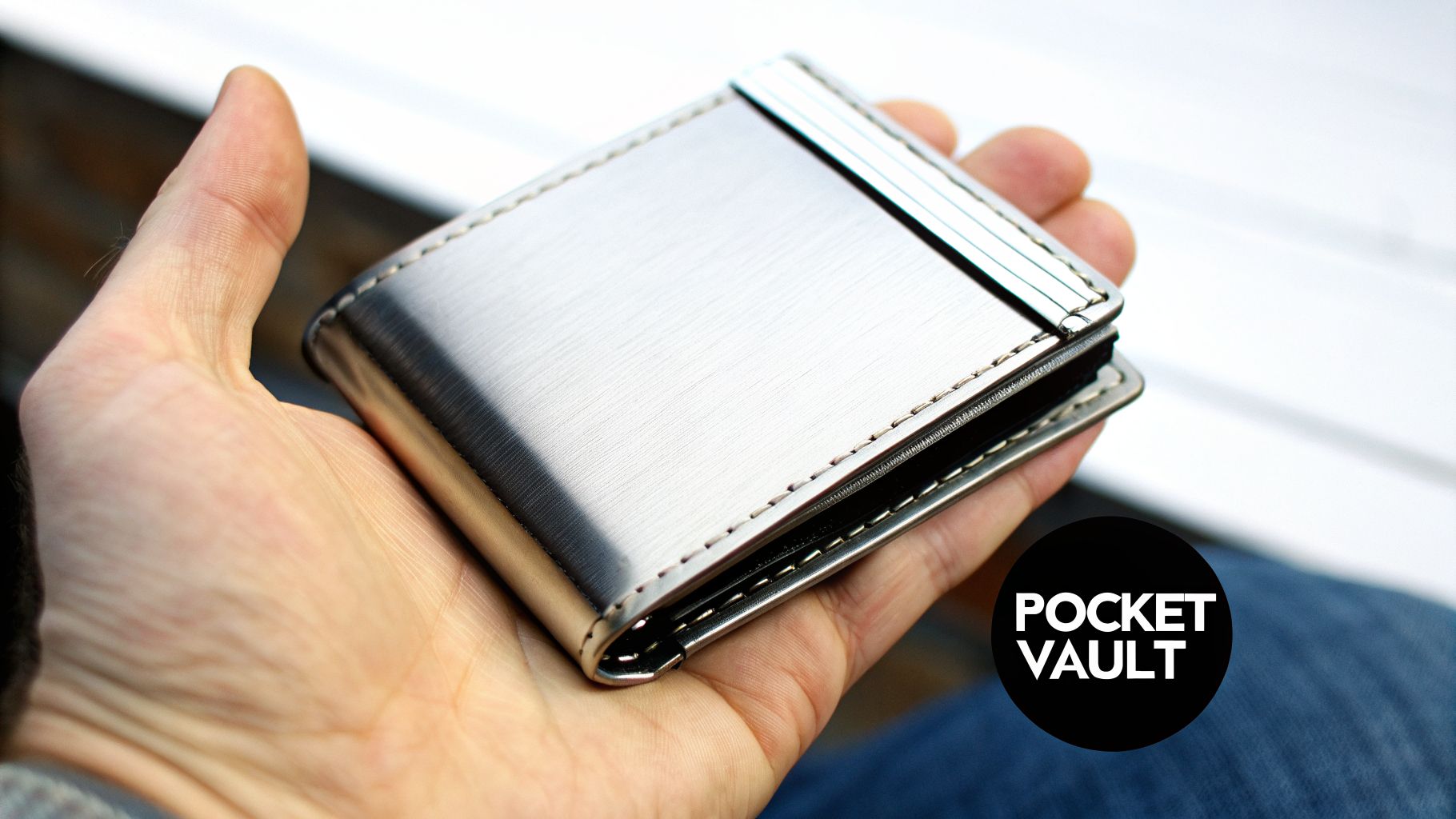
Think of it this way: switching from a leather wallet to a steel one is like swapping out a simple wooden chest for a modern safe. It’s not just a material change—it’s a fundamental shift in how you secure your most important pocket-sized assets.
For years, the leather bifold was the go-to choice. It's familiar and comfortable. But the world has changed, and so has what we need to protect. The stainless steel billfold keeps the practical, folding layout we like but forges it from one of the most resilient materials available.
More Than Just a Style Upgrade
The real draw isn't just the sharp, minimalist look. Choosing a steel wallet is a deliberate move toward strength and long-term reliability. Leather stretches, stains, and eventually tears. A steel wallet is built to take a beating, resisting crushing, scratches, and rust, so it keeps its shape and function for years.
This matters because what we carry in our wallets has become far more critical. They’re no longer just for a few bucks and a driver’s license. Today, they guard our entire financial lives.
- Essential Payment Cards: Credit and debit cards need protection from being bent, broken, or skimmed.
- Digital Keys: For crypto holders, a steel wallet becomes a fortress for a metal seed phrase plate, offering unmatched physical security.
- ID and Access Cards: Critical items that you need to keep both safe and accessible.
A stainless steel billfold isn’t just another wallet. It’s a piece of personal security gear, designed to fuse the convenience of a classic billfold with the near-indestructible nature of steel.
This unique blend makes it the perfect choice for anyone looking to seriously reinforce their everyday carry. Whether your main concern is keeping your cards physically safe or you need a discreet, fire-and-water-resistant vault for your crypto keys, this is the solution. It’s a strategic tool for a time when our physical and digital information both demand much stronger protection.
Understanding Wallet Materials and Construction
To really get what makes a stainless steel billfold wallet work, you have to look at how it’s engineered. The specific grade of steel is your first clue to its quality—it’s the difference between a tool that lasts a lifetime and a cheap knockoff.
Most quality steel wallets are made from either 304 or 316L stainless steel. Think of them as different formulas, each with its own strengths. Grade 304 is the reliable standard, used everywhere from high-end kitchen gear to architecture because it’s strong and fights corrosion well. It's more than tough enough for the daily grind of sharing a pocket with keys and a phone.
The Power of Precision Engineering
For anyone who needs the absolute highest level of durability, 316L stainless steel is the only real choice. It's often called "surgical" or "marine-grade" steel because it includes molybdenum, an element that gives it incredible resistance to chlorides like salt and sweat. This makes it practically immune to rust. If you live somewhere humid or are always on the move, a 316L wallet is built to last.
But the raw material is just the starting point. The construction is what truly defines the wallet. The best ones aren't just stamped out of a metal sheet; they're carved from a solid block of steel using CNC (Computer Numerical Control) machining.
This is the same process used to create luxury watch cases and precision medical instruments. A computer guides cutting tools with microscopic accuracy, ensuring every surface is perfect and every component fits together without fault.
This precision is what gives the wallet its smooth finish, stopping it from snagging on your pocket liner or scratching up your cards. Cheap alternatives with sharp, unfinished edges are a dead giveaway of rushed production and poor quality control.
Built Like a Fortress, Not a Tin Can
When you hold a well-made stainless steel wallet, you can feel the build quality instantly. The hinge should feel solid and move smoothly, engineered for thousands of cycles without getting loose. The plates themselves should be thick enough to feel rigid and protective, but not so thick they become a burden in your pocket.
Look for these hallmarks of solid construction:
- Deburred Edges: Every corner and edge should be perfectly smooth. This is the result of careful finishing after the main machining is done.
- Solid Hinge Design: A good wallet will have integrated hinges or heavy-duty fasteners built for the long haul, not flimsy pins that are doomed to fail.
- Consistent Finish: Whether it’s a brushed or polished look, the surface should be uniform across the entire wallet. It’s a clear sign of attention to detail.
At the end of the day, a quality stainless steel wallet is an investment. It’s a piece of gear built with the same exacting standards as high-performance equipment. This level of craftsmanship means it won’t just carry your cards—it will protect them with engineered strength for years.
Comparing Wallet Materials: Steel vs. The Competition
Picking the right wallet material goes way beyond looks. It’s a practical choice that directly affects how long your wallet lasts, how secure your cards are, and how it feels in your pocket every day. When you put a stainless steel billfold up against the usual suspects, the differences are striking.
The Old Guard: Leather
Think of a traditional leather wallet. It's comfortable, classic, and breaks in over time, developing a unique character. But that's where the benefits end. Leather offers almost no protection against bending or cracking your cards, and it has zero built-in RFID blocking unless a special liner is added. It's also vulnerable to water, stretches out of shape, and will eventually tear at the seams.
The Metal Contenders: Titanium and Aluminum
In the world of metal wallets, you have a few key players. Aluminum wallets are the lightweights—easy on the pocket and the budget. The trade-off is that aluminum is a softer metal, making it more susceptible to dings, dents, and scratches over time.
On the other end of the spectrum is titanium. It's the premium, aerospace-grade choice. You get incredible strength in an unbelievably lightweight package, but that performance comes with a hefty price tag that puts it firmly in the luxury category.
Stainless Steel: The Sweet Spot
This is where stainless steel wallets find their niche. They deliver a massive upgrade in physical protection over aluminum without the sticker shock of titanium.
Yes, steel is heavier, but that weight isn't just for show. It translates directly into superior crush resistance, giving you real peace of mind that your cards are safe from damage. It feels substantial for a reason.
A key advantage is that stainless steel naturally creates a Faraday cage. This means it provides excellent RFID protection right out of the box—it’s an inherent property of the material, not a flimsy add-on liner.
This decision tree gives you a framework for judging the quality of any metal wallet you're considering.
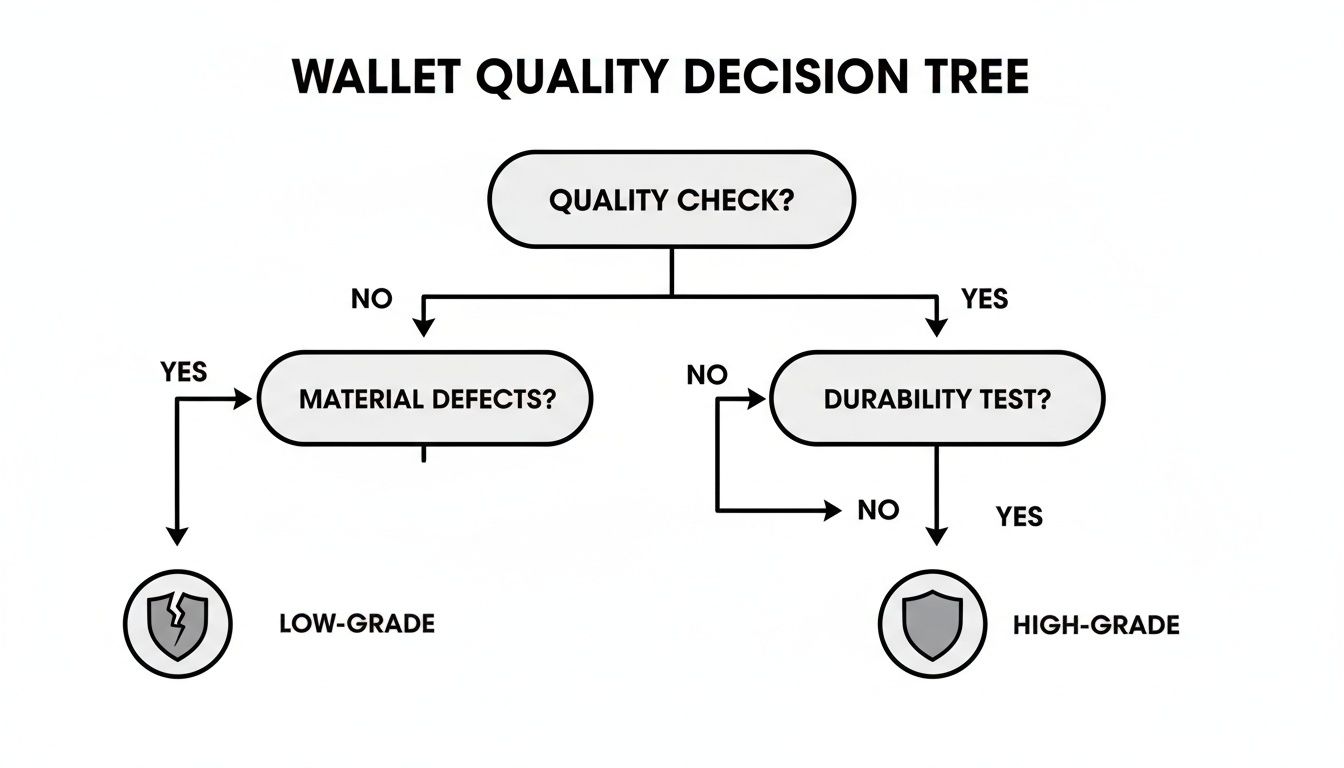
The takeaway is simple: high-grade materials and solid construction are what separate a reliable wallet from a piece of junk.
Wallet Material Showdown: Steel vs. The Competition
To make the choice clearer, here’s a direct comparison of key attributes for popular wallet materials. This table will help you decide which option best fits your daily needs and security priorities.
| Material | Durability | Weight | RFID Blocking | Cost | Primary Advantage |
|---|---|---|---|---|---|
| Stainless Steel | Very High | Moderate-Heavy | Excellent | Mid-Range | Balanced Strength & Cost |
| Leather | Low-Moderate | Light | None (Needs Lining) | Varies | Classic Feel & Patina |
| Titanium | Highest | Very Light | Excellent | Very High | Strength-to-Weight Ratio |
| Aluminum | Moderate | Very Light | Good | Low-Mid | Lightweight & Affordable |
| Carbon Fiber | High | Lightest | Varies (Needs Lining) | High | High-Tech Look |
Ultimately, the best wallet material comes down to what you value most. If you're looking for the best all-around solution that combines serious durability, built-in security, and modern design without breaking the bank, the stainless steel billfold is an incredibly compelling choice. It offers a tangible sense of security that softer, more traditional materials just can't match.
How Steel Wallets Protect Your Crypto Seed Phrase
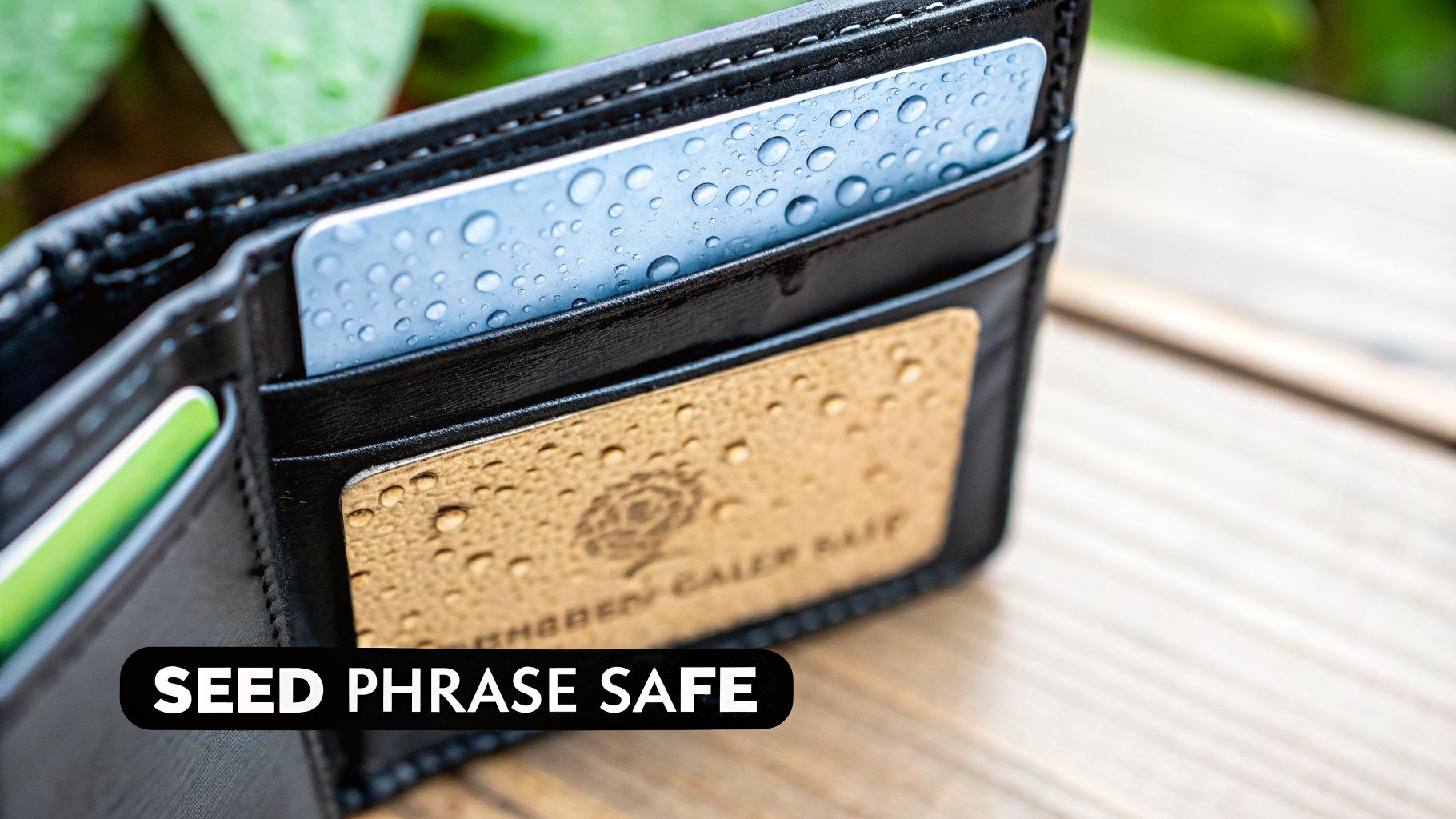
If you own crypto, you know that keeping your seed phrase safe is job number one. But let's be honest, scribbling it on a piece of paper is just asking for trouble. It's a flimsy defense against fire, floods, or even just ink fading over time.
This is where a stainless steel billfold wallet completely flips the script. It’s not just a wallet; it’s a discreet, everyday fortress for the keys to your digital assets. Think of it as a personal bodyguard for your recovery words, offering a level of physical security that paper or leather can’t even begin to approach.
The Ultimate Fireproof and Waterproof Safe
Any serious cold storage needs to withstand a catastrophe. A house fire can easily top 1,000°F, which would instantly incinerate a paper backup. Stainless steel, on the other hand, doesn’t even start to melt until around 2,500°F. An engraved seed phrase plate tucked inside will come out the other side perfectly readable.
Water is just as big a threat. A burst pipe or a simple spill can turn a paper seed phrase into a useless pulp. But a stainless steel wallet, especially one made from high-grade 316L steel, is naturally waterproof and resists corrosion. Your keys are shielded from the most common household disasters, giving you peace of mind that your crypto is recoverable, no matter what.
The bottom line is simple: your digital wealth is only as secure as the physical thing holding its recovery key. Steel offers a nearly indestructible solution that fits right in your pocket.
Security Through Obscurity and Tamper Evidence
One of the smartest reasons to use a stainless steel billfold for your seed phrase is security through obscurity. A dedicated crypto steel plate, while tough, might as well have "valuable crypto keys inside" written on it. A wallet, however, is just a wallet. It's boring. It blends in.
This everyday appearance makes it a terrible target for a thief. To a burglar rifling through your things, it’s just a heavy wallet, not a direct line to your crypto fortune. It’s a subtle but powerful strategic advantage.
On top of that, a well-built steel wallet provides a clear form of tamper evidence. Deep scratches, pry marks, or a busted hinge are dead giveaways that someone tried to force it open. That visual cue gives you a crucial early warning of a potential breach, long before you find out your assets are at risk. Our guide on the best metal seed phrase storage solutions digs much deeper into this idea.
A Complete Security Ecosystem
This blend of high-end payment tech and hardcore crypto security is catching on fast. The hardware wallet market alone is projected to hit $2.55 billion by 2033. You can see the industry moving this way with advanced models like the Trezor Safe 5, which uses stainless steel elements alongside open-source firmware and secure chips. For a deeper dive into market trends, check out this insightful MEXC analysis.
Of course, even the best physical protection can’t stop human error. Forgetting a password or dealing with corrupted hardware can still lock you out. That’s why you need a complete strategy. A tough-as-nails wallet is your first line of defense, but a service like Wallet Recovery AI acts as your final backstop, giving you a way to regain access without ever compromising your keys.
How to Choose the Right Stainless Steel Wallet
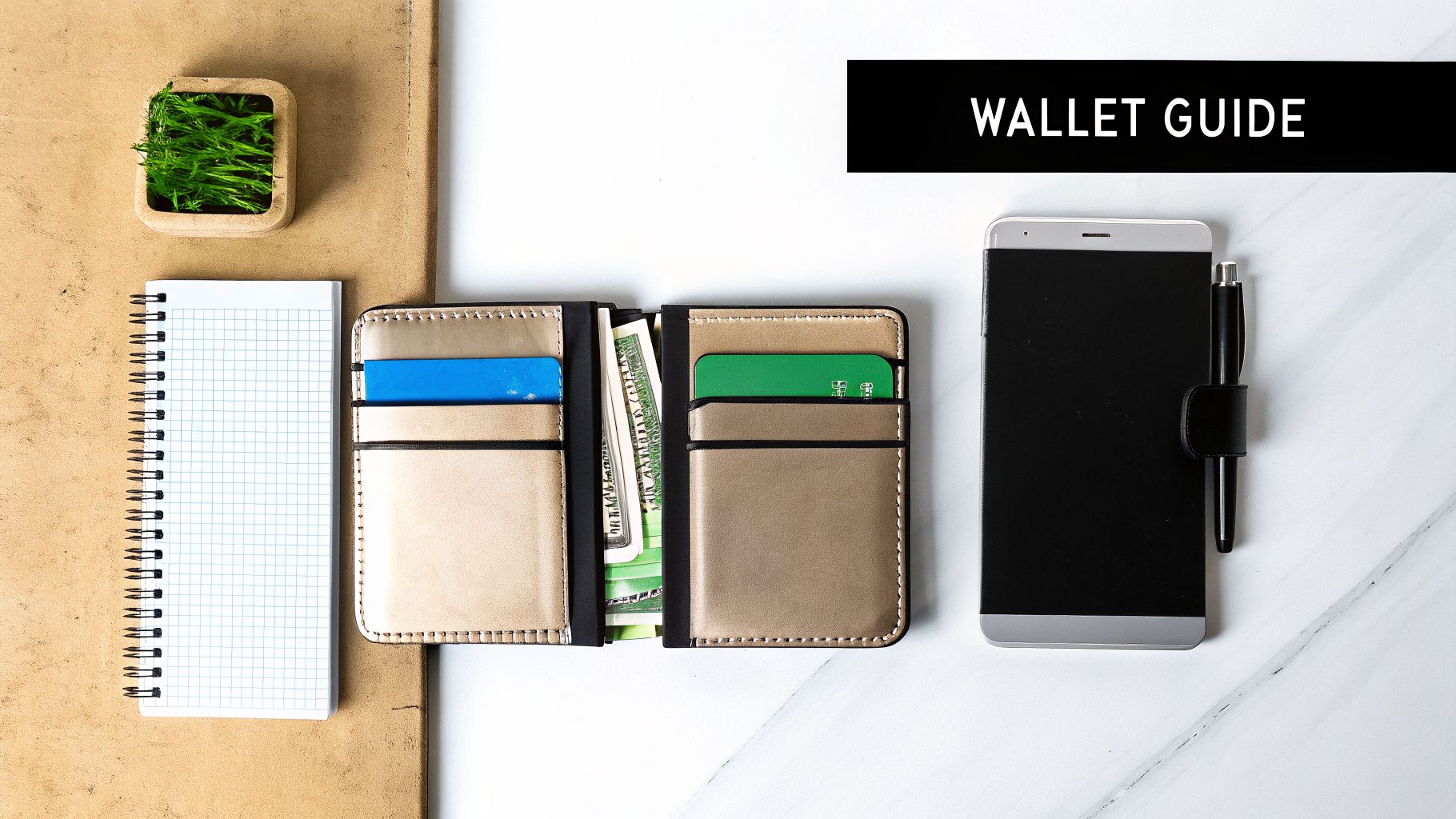
Picking the perfect stainless steel wallet is about more than just its sleek design—it’s about how it works for you, day in and day out. The right choice feels like a natural part of your routine, while the wrong one just ends up as an expensive paperweight.
The first thing to do is get real about what you carry. Pull out your old wallet and count the cards you actually use versus the ones just taking up space. Most people find they only need a handful, which makes switching to a slim steel design surprisingly painless. A wallet built for 6-8 cards is the sweet spot for most.
Defining Your Daily Carry Needs
After figuring out your card count, think about how you handle cash. Steel wallets have some clever ways to hold bills, but they’re not all the same.
- Money Clip: A great fit if you only carry a few bills. It’s incredibly secure, but it can feel bulky if you’re trying to clip a thick stack of cash.
- Cash Strap: This is a more flexible option, usually made from a tough elastic band. It adapts well to different amounts of cash, though the strap itself might need replacing after a few years of heavy use.
- Dedicated Compartment: This is the classic billfold approach, with a separate slot just for your bills. It’s less common in the ultra-minimalist models but perfect if you still use cash frequently.
The wallet's physical size and weight are just as important. A thicker, heavier wallet might feel solid, but a slimmer, lighter one is far more comfortable for front-pocket carry. You should also consider the finish—a brushed steel surface does a much better job of hiding fingerprints and small scuffs than a polished one, making it the more practical daily driver.
Special Considerations for Crypto Holders
If you’re holding crypto, your wallet choice takes on another level of importance. You’ll want to find a stainless steel billfold that can also discreetly secure a metal seed phrase plate. Look for a model with a dedicated interior compartment or a design that can securely sandwich the plate between its steel walls. This gives you fireproof, waterproof, and crush-proof protection without screaming "valuable crypto inside."
This growing demand for secure, portable crypto storage is reshaping the accessory market. As hardware wallets become more mainstream, their physical security is a top priority for users and manufacturers alike.
The global hardware wallet market is currently valued at $582.98 million and is projected to hit $3,300.86 million by 2033. This boom is led by devices from Ledger and Trezor, which often use rugged stainless steel components. With research showing nearly 40% of users mishandle their cold wallets, choosing a billfold that doubles as protection for your backup seed is a smart move. You can find more details on these hardware wallet market statistics and why physical security is so critical.
Common Questions About Stainless Steel Wallets
Making the jump to a stainless steel wallet is a big change, and it's smart to have a few questions. Moving from soft leather to hard steel can seem intimidating, but you'd be surprised how practical they are for daily life.
Let's clear the air and tackle the most common concerns people have. We'll cover everything from daily use to the finer points of security, so you can feel confident about making the upgrade.
Will a Steel Wallet Scratch My Cards or Phone?
This is easily the number one question, and it's a valid one. Thankfully, any well-made stainless steel billfold wallet is engineered to prevent exactly that. The edges are expertly smoothed and deburred, so they won't snag on your pocket fabric or scrape your cards.
Many of the best models also build in fabric liners or slim plastic sleeves. These create a soft buffer zone, keeping your credit cards and ID looking brand new. As for your phone, could direct, forceful contact cause a scratch? Sure, just like a set of keys could. But for normal pocket-sharing, you're generally in the clear. If you want zero risk, just keep them in separate pockets.
Are Stainless Steel Wallets Too Heavy?
It’s true, steel is denser than leather or canvas. But modern designs are incredibly efficient and surprisingly lightweight. A minimalist steel wallet often weighs just a couple of ounces more than a traditional leather bifold stuffed with the same number of cards.
Designers have obsessed over the "pocket footprint," creating slim, streamlined profiles perfect for carrying in your front pocket. Most people who switch barely notice the slight increase in weight. What they do notice is how substantial and secure it feels. It’s a feeling of substance, not a burden.
The trade-off is simple: you accept a little extra heft for a wallet that's crush-proof, water-resistant, and will probably outlast you. It’s a kind of physical security you just can't get from fabric or leather.
How Well Does a Steel Wallet Protect a Seed Phrase?
Extremely well. A stainless steel wallet is one of the most effective and discreet ways to secure a crypto seed phrase. Think of it as a small vault in your pocket, protecting an engraved metal plate from all the things that would instantly destroy a paper backup.
Here’s a quick rundown of why it's so much better:
- Fire Resistance: Steel won’t melt until around 2,500°F, meaning it can easily survive a house fire where paper turns to ash.
- Waterproof: It's completely immune to water damage, flooding, or just a spilled drink.
- Crush-Proof: Its rigid body ensures the engraved plate inside can't be bent, broken, or damaged.
But its biggest advantage might be security through obscurity. A steel wallet doesn't scream "I'm holding crypto keys!" like some other metal plates do. It blends in, making it a far less obvious target for thieves. If you want to dig deeper into physical backups, our guide on a wallet seed phrase has more detail.
Can I Take a Metal Wallet Through Airport Security?
Yes, absolutely. Traveling with a stainless steel wallet is completely normal and won't cause you any trouble. When you get to the security checkpoint, you'll just take it out and place it in the tray with your phone, keys, and watch.
TSA agents and other security staff screen metal money clips, buckles, and jewelry all day long. Your wallet is no different. It won’t trigger any special alarms or cause delays, making it a perfectly fine companion for frequent flyers.
Even with the most durable wallet, accidents like forgotten passwords or hardware failure can happen. Wallet Recovery AI offers a secure and confidential way to regain access to your crypto assets without compromising your privacy. Request help online to start your recovery process with expert assistance.
Leave a Reply