
At its core, cold storage crypto is simply the practice of keeping your cryptocurrency private keys completely offline. Think of it as the digital equivalent of moving your life savings from a wallet in your back pocket to a high-security vault. It’s the single most effective way to shield your assets from the ever-present dangers of the internet, like hackers and sophisticated phishing scams.
What Is Cold Storage Crypto? A Simple Breakdown
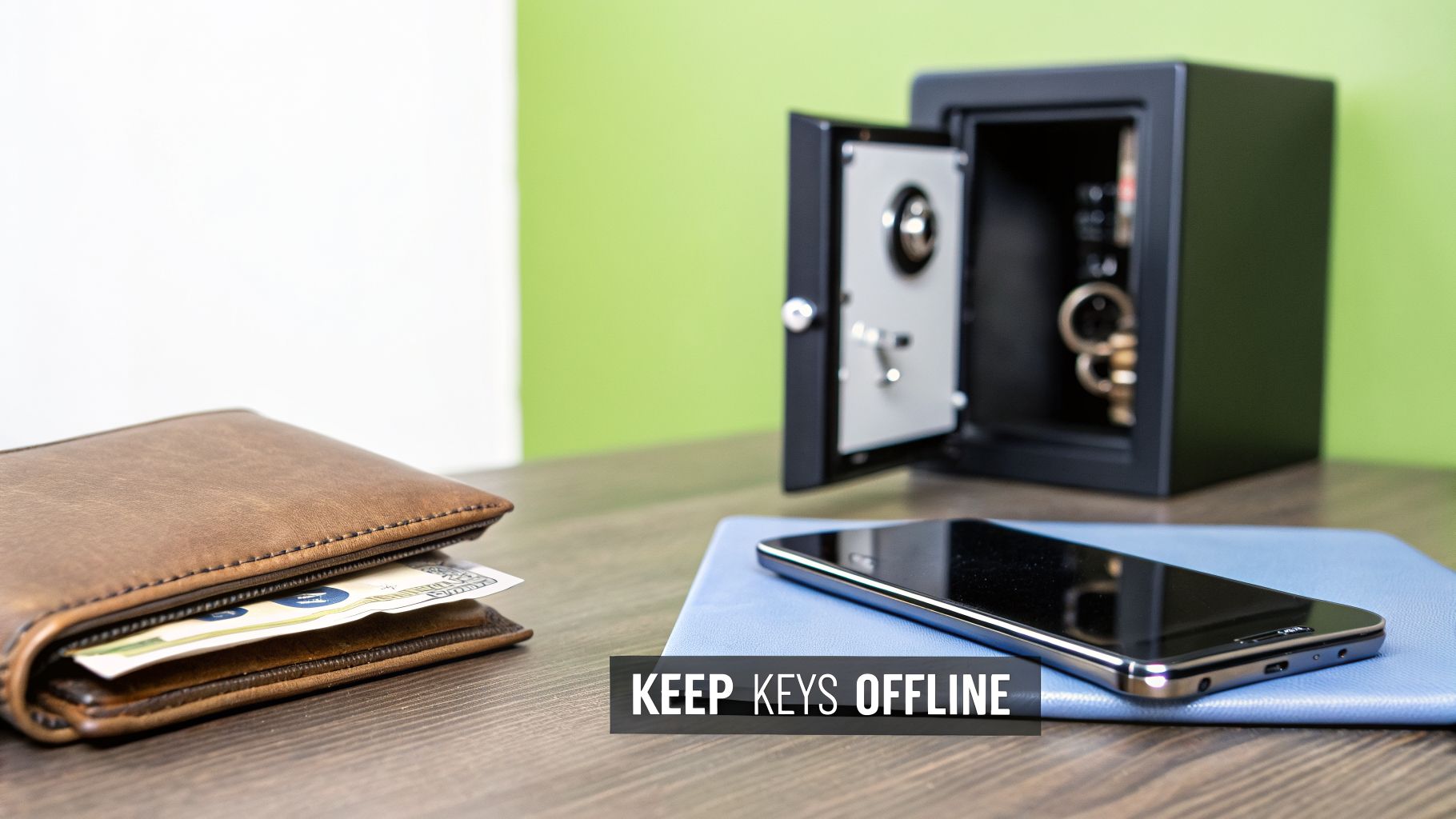
Let’s use a real-world comparison. You have your everyday wallet for grabbing coffee or groceries—it's convenient but also a prime target for a pickpocket. Then you have a bank's safe deposit box, which is less convenient for daily spending but offers unmatched protection for your most valuable items. This is the fundamental difference between online "hot" wallets and offline cold storage.
The Golden Rule: Keep Your Keys Offline
The entire strategy behind cold storage boils down to one simple but powerful rule: your private keys must never touch the internet. These keys aren't just passwords; they are long, secret codes that prove your ownership and give you total control over your cryptocurrency. If a thief gets your keys, they get your coins. It’s that simple.
By taking these keys completely offline, you create what's known as an "air gap"—a physical separation between your crypto and the internet. This makes it practically impossible for a remote hacker to get to them because there's simply no digital path to follow.
This offline method is widely seen as the gold standard for securing crypto, especially for long-term holders. While assets on an exchange or in a mobile wallet are perpetually online and vulnerable, cold storage keeps them insulated from the most common and devastating digital attacks. If you want a deeper dive into how this all works, our guide on where cryptocurrency is stored is a great next step.
Going this route gives you complete sovereignty over your digital wealth, but it also means the responsibility for keeping those keys safe is 100% on you. The trade-off is well worth it for the major advantages it provides:
- Unbeatable Security: Your private keys are never exposed to online threats like malware, spyware, or phishing attacks.
- Absolute Ownership: You and only you hold the keys. There’s no third party, like an exchange, that can freeze or lose your funds.
- Total Peace of Mind: For anyone serious about holding crypto for the long haul, cold storage offers confidence that your investment is safe from a catastrophic online breach.
Exploring the Different Types of Crypto Cold Storage
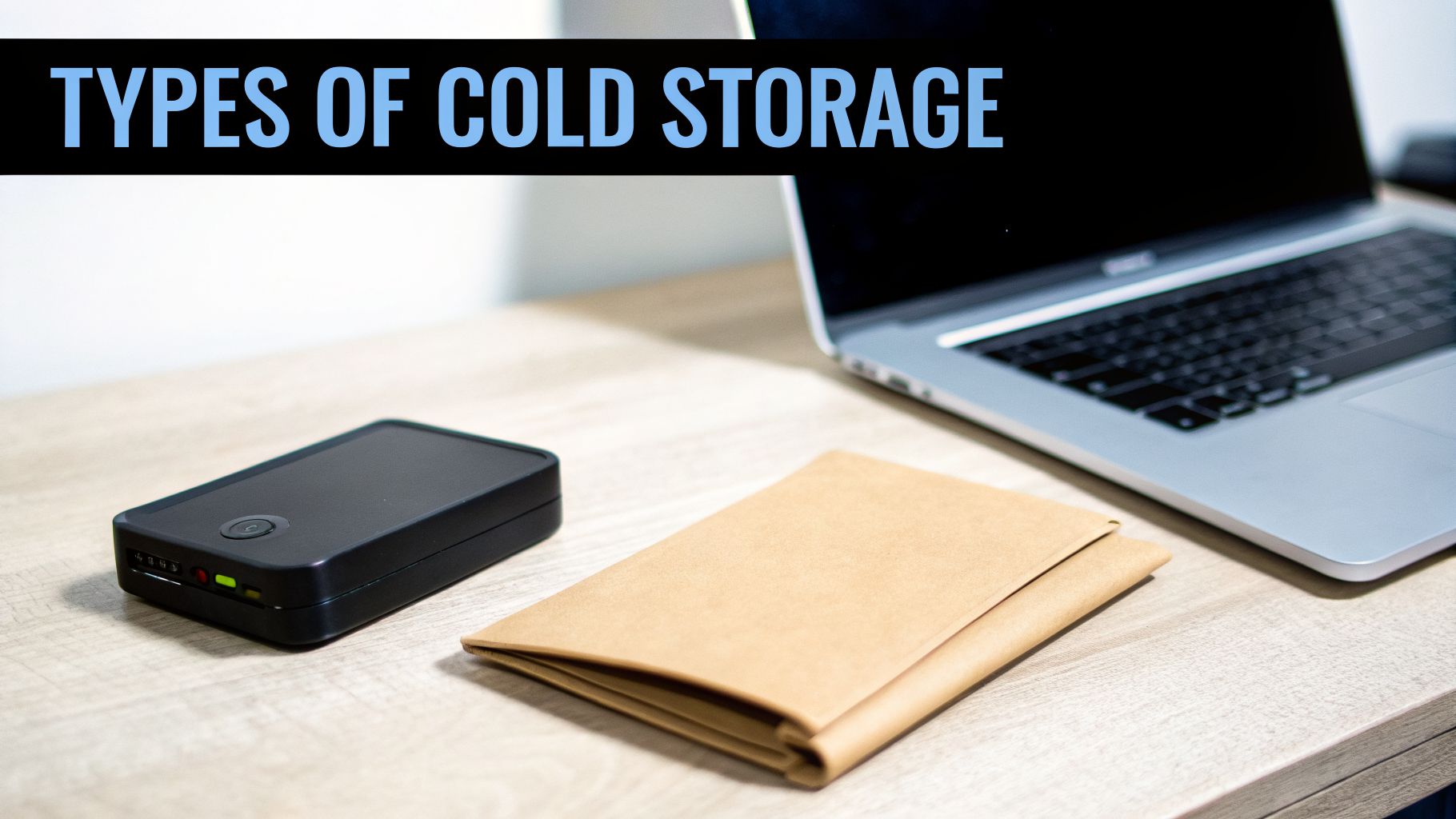
When people talk about what is cold storage crypto, they're not talking about one single product. It’s a whole spectrum of methods for taking your keys offline, each striking a different balance between security and everyday convenience. Figuring out which one fits your situation is the first real step toward securing your assets.
The most popular starting point, and for good reason, is the hardware wallet. Think of devices from Ledger or Trezor as tiny digital vaults. Their only job is to protect your private keys and sign transactions without ever letting those keys touch your internet-connected computer.
The process is simple but powerful. When you want to send crypto, your computer sends the unsigned transaction to the hardware wallet. You then physically press a button on the device to approve it. The device signs the transaction internally using your offline private key and sends only the signed transaction back. Your keys never leave the hardware.
Physical and Low-Tech Backups
Going a step further back to basics, you have options like paper wallets and physical seed phrase backups. A paper wallet is exactly what it sounds like: a piece of paper with your public and private keys printed on it, sometimes as QR codes for easy scanning. It’s as low-tech as it gets, which also makes it completely immune to online hacking.
Every hardware wallet also generates a seed phrase (also called a recovery phrase) when you first set it up. This list of 12 or 24 words is the master key to every single address and asset your wallet manages.
Your seed phrase is the ultimate backup. If your hardware wallet is ever lost, broken, or stolen, you can use these words on a new device to get everything back. Protecting the phrase is just as critical as protecting the wallet itself.
This is why we always tell people to write the phrase down—physically—and store it somewhere safe and private, like in a fireproof document bag or a safe deposit box. Some people even etch their phrase onto steel plates to make sure it survives a fire or flood.
Advanced Cold Storage Solutions
For those protecting significant funds—think crypto funds, company treasuries, or serious individual investors—standard methods might not be enough. More advanced setups require a bit more technical skill but offer institutional-grade security against very sophisticated attacks.
-
Air-Gapped Systems: This setup involves a dedicated computer that will never connect to the internet. You create a transaction on your regular online computer, save it to a USB drive, and walk it over to the offline "air-gapped" machine. You sign it there, save it back to the USB, and then broadcast it from your online machine. This creates a true physical barrier that’s even more secure than a standard hardware wallet.
-
Multi-Signature (Multisig) Wallets: A multisig setup requires multiple keys to approve a single transaction. A common arrangement is a "2-of-3" wallet, where you have three keys in total but only need two of them to sign off. This completely eliminates a single point of failure. A thief would have to compromise two separate keys, which are often stored in different physical locations, to access the funds.
-
Smart Contract Wallets: On blockchains like Ethereum, you can build cold storage with programmable logic. These wallets can be coded with rules, such as time-delay locks on withdrawals, daily spending limits, or whitelists that only allow transfers to pre-approved addresses. It's a powerful way to add on-chain rules that can protect your funds even if your keys are somehow exposed.
Each of these methods is a different tool for the same job: keeping your crypto safe. The right one for you really boils down to how much you're securing, your comfort level with the technology, and your personal threat model.
The Real Pros and Cons of Using Cold Storage
So, is cold storage the right move for you? It really comes down to a trade-off: bulletproof security versus some very real-world responsibility. It isn't a one-size-fits-all solution, but getting a handle on the give-and-take is the only way to make the right call for your assets.
The biggest win with cold storage is simple: you're taking your crypto completely off the grid. This gives you unmatched security against online threats. By pulling your private keys into the physical world, you’re yanking them off the digital battlefield where hackers, malware, and sophisticated phishing attacks live. We've all seen the headlines about exchange hacks costing users billions—that’s a class of threat cold storage just wipes off the board. It puts you in the driver’s seat with true ownership, secured by keys that only you control.
But that level of security comes at a price, and that price is convenience.
The Inconvenience Factor
If you’re an active trader trying to catch a market move, cold storage will feel clunky. It just isn't built for speed. The process of digging out your hardware wallet, connecting it, double-checking the transaction on its tiny screen, and then physically pressing buttons to approve it takes time. It’s not a one-click affair, and that's by design. This friction is a security feature, but it's a major drag for high-frequency trading.
This is exactly why many seasoned crypto holders use a hybrid strategy. They’ll keep a smaller, “spending” balance on a trusted exchange or in a well-regarded hot wallet for quick trades. Meanwhile, the lion’s share of their portfolio—the long-term HODL stash—is locked down safely in cold storage. It's the best of both worlds: daily usability without sacrificing long-term security.
The Responsibility of Physical Security
Here’s the part that trips people up: cold storage makes you the bank. And the security guard. And the vault manufacturer. While it insulates you from digital thieves, it opens the door to physical threats.
Your cold storage wallet is a physical object. It can be lost, stolen, destroyed in a house fire, or simply break. This is why your recovery seed phrase isn't just important—it's everything.
Lose your device and that slip of paper with your recovery phrase? Your crypto could be gone. For good. There's no "Forgot Password" link to click or support team to bail you out. It’s an unforgiving system that demands careful, deliberate planning from day one.
Let's break down the core trade-offs:
- Pro: Ultimate Security: Your funds are practically invisible to the online attacks that wipe out most crypto users.
- Con: Physical Risk: You are 100% responsible for protecting your wallet and seed phrase from theft, loss, and damage.
- Pro: True Ownership: No bank, exchange, or government can freeze, seize, or lose your funds. You have absolute control.
- Con: Inconvenience: Moving funds is a deliberate, multi-step process, making it a poor choice for day trading.
Ultimately, choosing cold storage means you’re consciously putting security and self-sovereignty ahead of convenience.
How to Set Up Your First Cold Storage Wallet
Ready to take control and move your crypto offline? Good. It's one of the smartest moves you can make. While it might feel intimidating at first, getting a hardware wallet up and running is actually pretty straightforward.
Let's walk through the process, focusing on the most common method: setting up a new hardware wallet.
Step 1: Buy Your Device from a Verified Source
This is the most critical step, and it happens before you even touch the device. You must buy your hardware wallet directly from the manufacturer (like Ledger or Trezor) or one of their officially authorized resellers.
Never, ever buy a hardware wallet from a random eBay seller, a third-party Amazon marketplace, or secondhand. It's a huge gamble. Scammers are known to sell compromised devices with backdoored firmware. The second you send funds to one of these "trojan horse" wallets, they're gone for good. Pay the extra few dollars for a factory-sealed device from a trusted source. This part is non-negotiable.
Step 2: Initialize the Wallet and Generate Your Seed Phrase
Once the wallet arrives, take a close look at the box and seals. Does anything look opened, resealed, or tampered with? If it doesn't look perfect, send it back. If it's pristine, you're ready to start.
The process usually involves connecting the device to your computer and following the on-screen instructions. You'll be prompted to do two things:
- Set a PIN Code: This is what you'll use to unlock the physical device itself. Make it strong and unique.
- Generate a Recovery Phrase: The device will display a 24-word recovery phrase, often called a seed phrase. This is the master key to all of your crypto.
This phrase is everything. If your device is ever lost, stolen, or smashed with a hammer, this sequence of words is the only way to get your funds back by restoring them on a new wallet.
The golden rule: Never, under any circumstances, store your recovery phrase digitally. Don't take a picture of it. Don't email it to yourself. Don't save it in a notes app or a password manager. Write it down on paper or stamp it into metal, and get it offline immediately.
Step 3: Secure Your Backup and Run a Test
You've written the phrase down. Now what? You need to protect that backup from fire, flood, and anyone who shouldn't see it. People use everything from a fireproof safe at home to a safe deposit box at a bank. Some even use specialized steel plates designed to survive a house fire.
Before you go all-in and move your life savings, do a small test run.
Send a tiny amount of crypto—say, $10 worth—to your new wallet address. Once it confirms, intentionally wipe the hardware wallet. Yes, reset it completely. Then, use your 24-word phrase to restore it.
Did your $10 balance reappear? Perfect. You've just confirmed your backup works. Now you can confidently transfer the rest of your assets, knowing they're properly secured. To compare different options, have a look at our breakdown of the best cold storage wallets on the market.
This simple graphic sums up the trade-offs you're making perfectly.
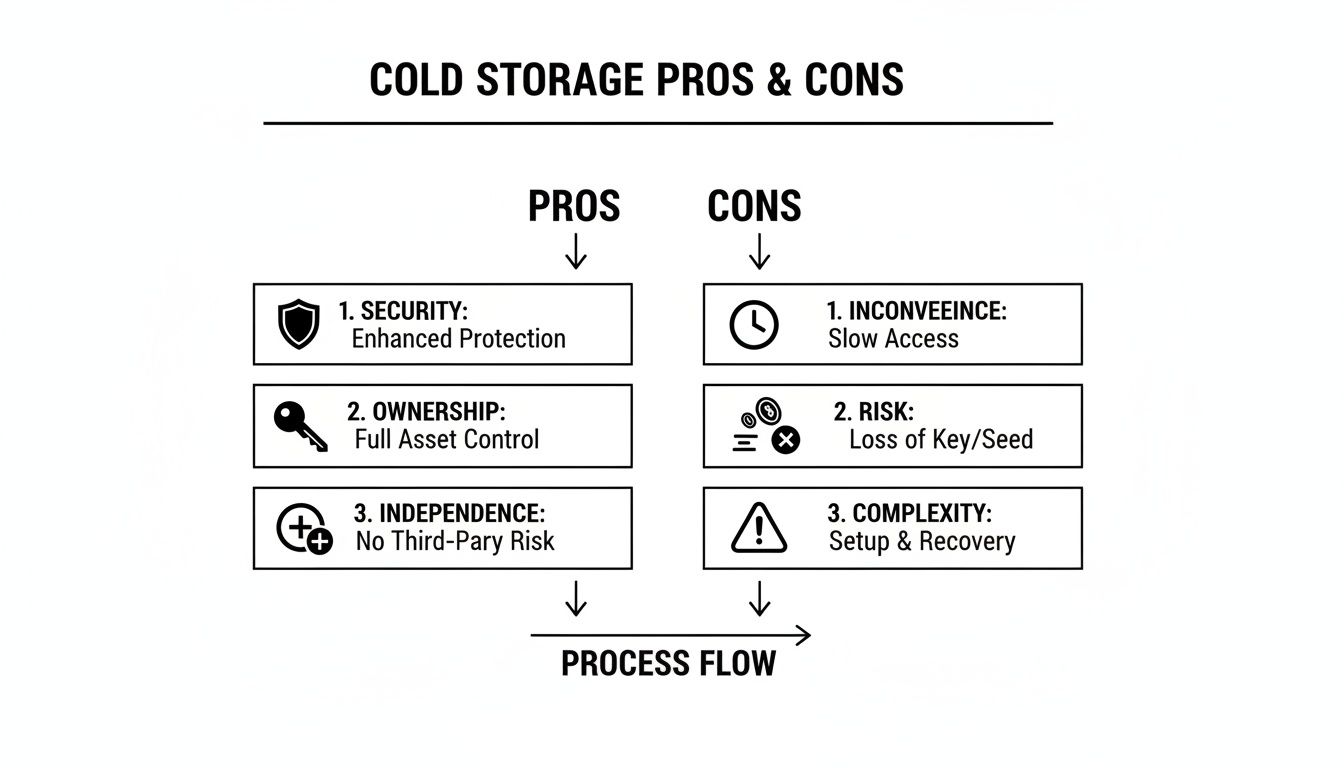
As you can see, you're trading a little convenience for a massive gain in security and true ownership. The downside is that you become responsible for not losing it, which is why getting the setup and backup process right is so important.
Best Practices for Securing Your Cold Storage Long-Term
So you’ve set up a cold storage wallet. That's a huge step, but don't stop there. Securing your crypto for the long haul is all about the habits you build after the initial setup. It’s about protecting your physical device and, most importantly, its recovery phrase.
Think of it this way: you just built a vault. Now you need to manage the keys, reinforce the doors, and have a clear disaster plan. Just tossing your wallet in a drawer and forgetting about it is not a plan—it's a gamble.
Physical Security and Redundancy
The most common threats to your cold storage have nothing to do with hackers. They’re brutally physical: theft, fire, floods, or just plain losing the device. Your first job is to defend against these real-world risks. This boils down to smart physical storage and creating redundant backups of your recovery seed phrase.
Here’s the golden rule: never, ever keep your hardware wallet and your only seed phrase backup in the same place. A single disaster, like a burglary or a house fire, could destroy both, leaving you with a total loss of your assets.
Your seed phrase is the master key to everything. Creating multiple copies and storing them in different locations is how you build real resilience. If one backup is compromised, another is safe and ready to restore your funds.
Here are a few proven strategies for protecting your backups:
- Fireproof and Waterproof Safes: A high-quality safe at home is a great starting point for your main hardware device and one copy of your seed phrase.
- Bank Safe Deposit Boxes: Storing a second backup of your seed phrase in a bank's safe deposit box adds another layer of off-site protection.
- Geographic Distribution: Some people give a sealed, tamper-evident copy of their seed phrase to a deeply trusted person, like a lawyer or a family member in another city.
Maintenance and Vigilance
Security isn't a "set it and forget it" task. It’s a continuous process. You have to stay sharp and defend against new threats that can pop up over time, both physical and digital.
First, test your backups periodically. At least once a year, grab a spare hardware wallet and try restoring it using one of your seed phrase backups. This simple drill confirms your backup is still readable, that you wrote it down correctly, and that you actually remember the process. The peace of mind this provides is invaluable.
Next, always keep your hardware wallet’s firmware updated. Manufacturers constantly release updates to patch security holes and improve functionality. This is critical: only download firmware updates through the official software, like Ledger Live or Trezor Suite. Never, ever click a firmware update link in an email or from a random website. That’s how people fall for supply chain attacks, where a fake update is designed to steal your keys. Your own diligence is the final firewall.
What Happens If You Lose Access to Your Cold Wallet
Taking control of your crypto with a cold wallet means you're not just your own bank—you're also the head of security. While this setup is fantastic for dodging online hacks, it opens the door to a different kind of disaster: getting locked out of your own funds. It’s the single biggest risk of self-custody, and something everyone needs a solid plan for.
Losing access can happen in a few frustratingly simple ways. Maybe it’s been a year, and you can't for the life of you remember your hardware wallet's PIN. Or perhaps the device itself got fried, drowned, or just decided to stop working. But the real gut-punch is losing your recovery seed phrase. That phrase is the master key to everything. Without it, your crypto is stranded on the blockchain, locked in a vault that you can never open again.
The Unforgiving Nature of Self-Custody
The blockchain doesn’t have a customer service desk. There’s no "Forgot Password" link to click. When you lose your keys—whether it's a PIN you can't recall or a seed phrase you've misplaced—the funds are usually gone for good. In fact, an estimated 20% of all Bitcoin is thought to be lost or stuck in inaccessible wallets, representing billions of dollars vanished because of this very issue.
Here, the line between total security and total loss is razor-thin. A simple human error, like misplacing a piece of paper or forgetting a password, can lead to a permanent financial loss.
Losing access to a cold wallet isn't just an inconvenience; it can mean a complete and irreversible loss of your assets. The responsibility to prevent this falls squarely on your shoulders, which makes having a bulletproof backup plan absolutely critical.
When Professional Help Is Your Last Hope
When you've tried everything you can think of and still can't get in, it’s easy to feel like it’s all over. But for some types of lockouts, there might still be one more option. This is where professional wallet recovery services come into play as a final line of defense.
If you’ve forgotten the PIN for a Ledger or Trezor and don't have your seed phrase handy, specialized services can use sophisticated techniques to try and crack the device. These experts provide a secure, confidential process for high-stakes situations, offering one last shot at getting your funds back when a simple mistake is about to become a permanent catastrophe.
Answering Your Cold Storage Questions
As you get more comfortable with the idea of cold storage, a few common questions always seem to pop up. Let's tackle them head-on to clear up any confusion.
Can a Cold Storage Wallet Actually Be Hacked?
When a wallet is truly offline, it’s effectively invisible to remote hackers. There’s simply no internet connection for them to exploit. The real threats are physical—someone could steal the device itself or, more likely, find your written-down recovery phrase. This is why securing your physical seed phrase backup is just as important as securing the hardware wallet.
How Much of My Crypto Should I Keep in Cold Storage?
A good rule of thumb is to treat your hot wallet like a checking account and your cold wallet like a high-security savings vault. Keep only what you need for active trading or immediate spending in a hot wallet. Everything else—your long-term investments that you can't afford to lose—belongs in cold storage.
For most serious investors, this means well over 90% of their portfolio is secured offline. Only a small fraction for short-term activity should ever sit in a less secure hot wallet.
Can I Receive Crypto if My Wallet Is Offline?
Yes. Your wallet never needs to be online to receive funds. You can give out your public address freely (never your private keys!), and anyone can send crypto to it. The transaction gets confirmed on the blockchain, and your balance will be updated the next time you plug in and sync your device.
If you've lost your password or your device is damaged, don't write off your funds as lost. Wallet Recovery AI provides a secure, professional service to help you regain access. Find out how our experts can help by requesting help for your locked wallet.
Leave a Reply