Losing access to your crypto wallet is a uniquely modern kind of panic. It feels like watching a safe door swing shut, with your financial future locked inside. It’s a gut-wrenching moment, but if you're going through it, you're definitely not the only one. This problem is surprisingly common and shows just how badly reliable recovery options are needed.
The High Stakes of Being Locked Out of Your Crypto
Forgetting a password for an old email account is an annoyance. Forgetting the password to your crypto wallet? That can be a life-altering mistake. Unlike a bank, where a quick call or email can reset your access, non-custodial wallets put all the responsibility squarely on your shoulders.
The sheer scale of this problem is why professional recovery services even exist. With more than 820 million crypto wallets out there and nearly 59% of them being non-custodial, the potential for people getting locked out is massive. The stakes are unbelievably high. Just look at the infamous story of James Howells and his lost hard drive holding 8,000 BTC—worth almost $1 billion at one point. It’s clear that losing access can be just as devastating as getting hacked, which is a big reason so many people are still hesitant to jump into crypto. You can read more about the growing need for crypto wallet recovery on technode.global.
A Modern Digital Locksmith
Instead of giving up hope, it helps to think of this as a solvable puzzle. That's where professional recovery services come in. They’re basically digital locksmiths for the modern age, equipped with the specialized tools and deep knowledge needed to crack complex cryptographic codes that are simply beyond the reach of the average person.
These experts offer a real, legitimate shot at getting your funds back. They blend powerful software with painstaking, methodical analysis to unlock assets that would otherwise be gone for good.
Think of it this way: You wouldn't try to crack a high-security bank vault by yourself. You'd call an expert. The same logic applies to your digital assets.
This guide is here to help you sort through the world of reclaim crypto reviews and make a smart choice. By learning what separates a trustworthy service from a scam, you can find a reliable partner to help you turn this incredibly stressful ordeal into a success story.
How to Decode Reclaim Crypto Reviews
Trying to figure out which crypto recovery reviews are real can feel like walking through a minefield. Scammers are absolute masters at faking social proof to pull in people who are already desperate. You have to put on your detective hat and learn to read between the lines.
Think about it: a genuine review will almost always have specific details. Someone who actually got their funds back might mention they had a corrupted Ledger Nano S or forgot their MetaMask password. They’ll talk about the timeline, what the process was like, and give a balanced take. The fake ones? They're usually vague, over-the-top, and dripping with emotion—think "miracle workers" and "life-saving," but with zero substance to back it up.
Spotting Red Flags in Testimonials
Your first job is to learn what the warning signs look like. They can be subtle, but once you know what to look for, a fraudulent operation sticks out like a sore thumb. If a service's reviews look a little too perfect or try to create a sense of panic, be very careful.
Here are a few classic red flags:
- Vague Praise: "They got my money back fast!" is a huge warning. A real person would likely mention the crypto, the wallet, or something specific about the problem.
- High-Pressure Language: Any review screaming "act now before it's too late!" is just using old-school scam tactics to rush you into a bad decision.
- Identical Phrasing: See the same phrases popping up in different reviews across multiple sites? That’s not a coincidence. It's either one person or a bot army at work.
- Guarantees of Success: Crypto recovery is messy. No legitimate company can promise a 100% success rate. Any review claiming a service has a perfect track record is almost certainly fake.
A legitimate service sets realistic expectations. They'll be upfront about the challenges and complexities of your case, not promise you the moon. Scammers sell impossible dreams; professionals offer expert help.
Identifying Green Flags of a Trustworthy Service
On the flip side, there are plenty of positive signs that point to a credible, professional outfit. These green flags signal transparency, real expertise, and a focus on actually helping the customer, not just grabbing their money.
You’re on the right track if you see reviews that mention:
- Specific Details: Comments like, "They helped me with my old Blockchain.com wallet," add a layer of authenticity that’s hard to fake.
- Clear Communication: When people praise a company's communication—like getting regular updates and clear explanations—it’s a great sign of a professional operation.
- Transparent Fee Structures: A genuine review might bring up the fee structure, especially if it’s a "no-win, no-fee" policy. That’s a common and reassuring practice among reputable services.
- Realistic Timelines: Testimonials that describe the process taking several days or even weeks are far more believable than those claiming everything was solved instantly.
Sorting through reviews is a critical step, and it pays to have a quick mental checklist. Scammers rely on emotional manipulation and vague promises, while legitimate services stand out with transparency and specific, verifiable details.
Here’s a simple table to help you tell the difference at a glance.
Red Flags vs Green Flags in Crypto Recovery Reviews
| Characteristic | Red Flag (Warning Sign) | Green Flag (Positive Indicator) |
|---|---|---|
| Language & Tone | Overly emotional, urgent, or generic praise ("They are miracle workers!"). | Balanced, detailed, and specific. Mentions the actual problem and process. |
| Success Claims | Guarantees 100% success or promises impossible results. | Acknowledges the complexity and discusses realistic outcomes. |
| Review Details | Lacks any specifics about the wallet type, crypto, or timeline. | Mentions the specific wallet (e.g., MetaMask, Ledger) and gives context. |
| Fee Structure | Demands large upfront payments before any work is done. | Mentions a clear, transparent fee model, like "no-win, no-fee." |
| Consistency | Multiple reviews use identical or suspiciously similar phrasing. | Each review is unique and sounds like it was written by a different person. |
Ultimately, this table is a tool to sharpen your instincts. Trustworthy services generate reviews that feel authentic because they are. They reflect real experiences, complete with all the details—good and bad—that come with a complex recovery process.
Understanding the Crypto Recovery Process Step by Step
So, what actually happens when you reach out to a professional for help? The crypto recovery world can feel a bit like a black box, but any legitimate process is methodical, secure, and designed to protect you every step of the way.
Think of it less like a magic trick and more like hiring a digital locksmith for a high-security vault. It takes real skill, specialized tools, and a clear, step-by-step approach.
The whole journey kicks off the moment you make contact. A reputable service will never lead with flashy promises or demand money upfront. Instead, they'll start with a detailed case assessment. This initial chat is all about them understanding your specific situation: what kind of wallet is it? What bits and pieces of the password do you remember? Are there any corrupted files? This part is crucial for setting honest, realistic expectations from the get-go.
Gathering Clues Securely
Once they’ve taken on your case, the next step is gathering the necessary information. This is where security really gets dialed up. A true professional will show you exactly how to provide clues—like parts of a password you recall or the wallet file itself—through properly encrypted channels.
A core rule in legitimate crypto recovery is that experts work with the clues you provide, not your credentials. They will never ask for your full seed phrase or private keys. Anyone who does is a scammer. Full stop.
After they securely have your information, the real high-tech work begins. This is where powerful computers and advanced algorithms start crunching the numbers, testing millions or even billions of potential password combinations based on the hints you gave them. Sometimes this process is quick, but it's often a marathon, not a sprint, needing a ton of computational muscle to crack the code.
The results speak for themselves. Top-tier wallet recovery firms have successfully brought back over $2.5 million in locked-up crypto, with one incredible case recovering $1.5 million in a single go. Bitcoin tends to be the big one, making up around 70% of the total value reclaimed. While some cases get solved in days, others can take months, all handled with strict security protocols after they've verified you're the owner. And it's almost always based on a 20% commission that you only pay if they succeed. You can read more about these wins over on Business Insider.
This flowchart breaks down the essential steps you should take when evaluating any service you come across.
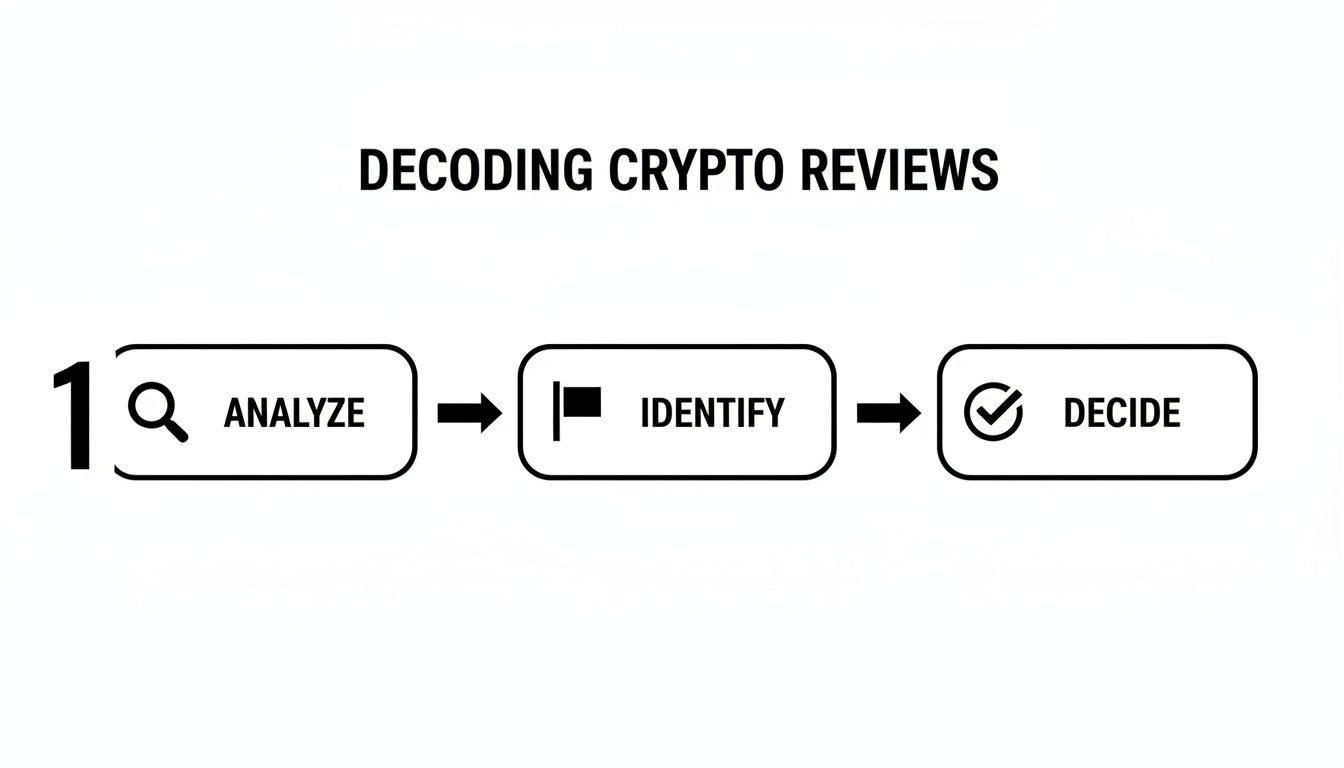
It really just boils down to analyzing the details, spotting the red flags, and making a confident call based on solid evidence.
Verification and Asset Restoration
The final step is the one you've been waiting for: getting your assets back. As soon as a working password is found, the service will let you know and walk you through how to access your wallet. Crucially, they do this without ever taking direct control of your funds themselves.
The whole process is built on a foundation of trust and verification. A legitimate service confirms you are the true owner before anything starts and ensures you—and only you—get back in at the end. This structured, secure workflow is what separates the real pros from the countless scams out there.
AI vs. Manual Attempts: Why Guessing Fails
When you're locked out of a crypto wallet, the first reaction is almost always the same: a frantic scramble to guess the password. We’ve all been there, hammering out every variation of old passwords we can possibly remember, hoping one will magically work.
While it’s a natural instinct, trying to manually guess your way back into a modern crypto wallet is like trying to pick a bank vault's lock with a paperclip. It's an exercise in futility.
The Overwhelming Limits of Human Guesswork
The cryptographic security protecting your wallet is specifically designed to defeat this exact kind of guesswork. A moderately complex password creates a staggering number of potential combinations—more than any person could ever test in a hundred lifetimes.
You might be able to try a few hundred, maybe even a few thousand variations before giving up. But that's just scratching the surface. A truly strong password has more possible combinations than there are atoms in the known universe. Each failed attempt just wastes time and, worse, can even risk corrupting the wallet file, making a professional recovery harder down the line.
A manual attempt is just a shot in the dark. You're relying on pure luck. An AI-powered approach is a systematic, methodical search that uses raw computational power to light up every single possibility.
How AI Changes the Entire Recovery Game
This is where AI-driven services completely flip the script. It’s not just about guessing faster; it's about guessing smarter. Professional recovery algorithms take the clues you provide—fragments of old passwords, important dates, names, or common phrases you use—and use them to slash the search field from impossibly large to manageable.
Here's where an AI-driven method has a massive advantage:
- Pattern Recognition: AI can spot subtle patterns in your old password habits that you're not even aware of. It then uses this insight to generate far more targeted and effective guesses.
- Massive Parallel Processing: These systems don't just test one password at a time. They test millions, sometimes billions, of combinations every single second. It’s a level of speed and brute force that is simply out of reach for any manual attempt.
- Handling Corruption: If a wallet file is damaged or fragmented, AI can often piece the data back together. It recognizes and repairs errors that would make the file completely unreadable to a human.
This is the technological edge that explains why so many positive reclaim crypto reviews come from people who first tried and failed on their own. They bring industrial-strength computing power to a problem that absolutely requires it.
If you want to get a better handle on the tech that makes this possible, our guide on crypto recovery software digs much deeper. Essentially, you’re trading blind guesswork for a calculated, high-speed analytical process built from the ground up to succeed.
Putting Security and Privacy First in Your Recovery Journey
When you're desperate for help, the biggest fear is walking straight into another trap. You've already lost access to your funds—the last thing you need is a scammer preying on that vulnerability. That’s why security and privacy have to be at the absolute top of your checklist. It's non-negotiable.
A legitimate recovery service builds its entire business on a foundation of trust, and that trust is earned through verifiable security practices. The most important concept here is the non-custodial approach. Put simply, this means the service never takes direct control of your wallet or your funds. Think of them as a locksmith who helps you forge a new key, not someone who demands you hand over the whole safe.
The Golden Rule of Recovery
This single principle creates a bright, unmissable line in the sand. It’s what separates the genuine experts from the outright thieves.
A reputable, professional recovery service will NEVER ask for your seed phrase or full private keys. Anyone who requests this information is a scammer. Period.
This rule is your shield. Real pros work with the clues you give them—password hints, old wallet files, transaction histories—without ever needing the keys to your kingdom. Demanding a seed phrase is the digital equivalent of a "locksmith" asking for the deed to your house before they help with a jammed door. It’s an immediate, indisputable red flag.
The threat landscape is always shifting. Personal wallet breaches now account for 20% of all stolen crypto, a huge jump from just 7.3% in 2022, as hackers focus more on individual users. With 30% of crypto owners having faced portfolio losses, the need for secure, trustworthy help is more critical than ever. You can dig into the full analysis of how hackers are changing their tactics on Chainalysis.com.
Verifying Security Protocols
Beyond that golden rule, you need to see other security measures in place. A professional service should be completely transparent about how they handle your data and protect your privacy.
Here’s what to look for:
- Encrypted Communication: Every interaction, from your first email to sharing sensitive files, absolutely must be conducted over encrypted channels.
- Strict Data Privacy: The service needs a clear, public policy detailing how your information is stored, used, and, just as importantly, deleted after the recovery attempt.
- Confidentiality Agreements: Many top-tier services will offer non-disclosure agreements (NDAs) to give you a legal guarantee that your privacy will be protected.
By demanding these high standards, you can navigate the world of reclaim crypto reviews with confidence and find a partner who respects your security as much as you do.
Your Action Plan for Safely Reclaiming Crypto
Alright, now that you're armed with the right knowledge, it's time to shift from a place of stress to a proactive, controlled plan of action. This is where you take back control. But before you even think about contacting a service, the first move is all about getting your own information in order, safely.
Start by compiling every scrap of information you can recall about the locked wallet. Think password fragments, clues about when you created it, any email addresses linked to it, and of course, the wallet file itself if you have it. Crucially, never, ever write down or share your full seed phrase or private keys with anyone. This prep work is for your eyes only; it’s about organizing the puzzle pieces that a legitimate service can work with.
Making Contact and Vetting Your Final Choice
With your details organized, you’re ready to reach out. Pick the service that stood out from your research and passed the credibility test based on genuine-looking reclaim crypto reviews. When you make that first contact, come prepared with sharp questions to verify their security practices.
You need to ask them directly:
- How exactly will my data be encrypted and kept safe during the recovery process?
- What happens to my data after the recovery attempt is finished? What's your retention policy?
- Can you confirm, on the record, that you will never need my seed phrase or private keys?
The way they answer these questions will tell you everything you need to know. A real professional will be happy you asked. They’ll give you clear, confident answers that line up with all the security best practices we've covered, explaining their non-custodial method and success-based fees without missing a beat.
This first conversation is your final, and most important, gut check. It’s where you make sure their actions match their words, giving you the peace of mind to proceed.
By taking this careful, step-by-step approach, you turn a frantic situation into a methodical process. You end up working with an expert not out of desperation, but from a position of informed confidence. To get a better feel for the process, you can read more about how a professional assets recovery company handles these cases.
Got Questions? We Have Answers.
When you're trying to get your crypto back, it's natural to have a ton of questions. It’s a stressful situation, and you need clear, direct answers to feel confident about the next steps. Let's tackle some of the most common things people ask.
Will You Ever Need My Private Keys or Seed Phrase?
No. Absolutely, unequivocally, never. This is the single most important rule in crypto recovery.
Think of it this way: your seed phrase is the master key to your entire vault. A legitimate recovery expert is more like a locksmith; we work with the clues you provide—password hints, old files, memory fragments—to craft a new key. We never need the master key itself.
If anyone, anyone, asks for your seed phrase, they are trying to rob you. It's that simple.
How Long Does This Whole Recovery Thing Take?
Honestly, it depends. Crypto recovery isn't like flipping a switch; it's a process that ranges from surprisingly quick to a long, patient grind.
If you have a good idea of the password and a clean wallet file, we might get you back in within a few days. But for tougher cases—maybe the wallet file is corrupted, or the password clues are really fuzzy—it can take weeks, or sometimes even months of heavy-duty computing power. A trustworthy service will always give you a realistic timeframe upfront after looking at your specific situation.
The most important thing here is patience. A rushed job is a sloppy job. A methodical, professional approach gives you the absolute best shot at success, no matter how long it takes.
Okay, But What Are My Actual Chances of Getting My Wallet Back?
There's no magic number here, and you should be extremely wary of any service that promises a 100% success rate. That's just not how this works.
Your odds of a successful recovery are directly tied to the quality of the information you can give us. The more you remember, the better. If you have the right wallet file and can provide solid clues about how you used to structure your passwords, your chances are very high.
This is where professional tools and AI really shine. They can test millions of combinations and recognize patterns that a human would miss, dramatically boosting the odds, especially on those really complex cases.
What Kinds of Wallets Can You Actually Recover?
Pretty much all of them. A professional recovery outfit has to be versatile because every wallet is built a little differently, each with its own quirks and security layers.
We handle a wide range of wallets every day, including:
- Software Wallets: The usual suspects like MetaMask, Trust Wallet, Electrum, and Exodus.
- Hardware Wallets: The big names like Ledger and Trezor.
- Keystore Files: Those tricky files from networks like Bitcoin and Ethereum.
- Web Wallets: Popular platforms like Blockchain.com or MyEtherWallet.
During our first chat, we'll confirm we have the expertise for your specific wallet. You'll know right away if we're the right team for the job.
Ready to move forward with a team that puts your security first? At Wallet Recovery AI, we mix powerful technology with total transparency to give you the best possible chance of reclaiming your crypto. Reach out today for a confidential assessment of your case.
Leave a Reply