
So, what exactly is an assets recovery company?
Think of them as digital locksmiths for the crypto world. They're specialized firms that help people and businesses get back into lost, stolen, or otherwise inaccessible digital wallets. Using a combination of high-tech tools, deep forensic analysis, and proprietary software, they tackle situations that seem hopeless—like a forgotten password or a compromised wallet.
The Growing Need for a Professional Assets Recovery Company
There’s a unique, sinking feeling that comes with losing access to your crypto wallet. It’s like watching a vault door slam shut, knowing there’s no central bank to call for help.
That’s the hard reality of decentralization. While it offers incredible security, it also means you’re on your own if you lose the key. This is precisely why the demand for professional help has exploded. A legitimate assets recovery company steps into this gap, offering a lifeline where one didn't exist before. They aren't hackers; they are forensic pros who systematically work to unlock what seems permanently gone.
The Scale of the Problem
The amount of crypto just sitting there, completely inaccessible, is staggering. A huge chunk of the world's Bitcoin is considered lost forever.
In fact, current estimates suggest that a mind-blowing 20% of all Bitcoin is inaccessible—a figure that represents tens of billions of dollars. On top of that, about 28% of Bitcoin hasn't moved in over five years, which could hide even more lost funds. And this doesn't even touch the billions lost every year to sophisticated scams or simple user mistakes. You can dig into more of these crypto statistics in recent industry reports.
The challenge is straightforward: digital assets are locked behind powerful cryptography. If you lose the keys, you lose access. A professional recovery service works to bridge that gap by methodically trying to reconstruct or bypass those digital barriers.
Spotting the Experts from the Scammers
Unfortunately, the desperation that comes with losing assets is a magnet for predators. A huge part of this guide is about arming you with the knowledge to tell a legitimate assets recovery company from a scam.
Here’s the quick breakdown:
- Legitimate Firms: They usually operate on a "no win, no fee" or success-based model. You can expect clear communication, realistic expectations, and a track record you can actually verify.
- Scammers: Watch out for anyone demanding big upfront fees. They often make unrealistic promises of guaranteed success and try to create a false sense of urgency to rush you into a bad decision.
The goal here is to replace that anxiety with an actionable plan. We'll walk you through how to prepare your case, vet potential partners, and understand what the recovery process really looks like. With the right help, getting your assets back isn’t just a hope—it’s a real, tangible possibility.
We see a lot of the same issues pop up time and time again. Below is a quick look at the most common reasons people reach out for professional help.
Common Scenarios Requiring an Assets Recovery Company
| Issue | Description | Affected Wallets/Assets |
|---|---|---|
| Forgotten Passwords | The most common issue. A user forgets the password to their wallet file, encrypted backup, or online account. | Bitcoin Core (wallet.dat), Ethereum Keystore (JSON), MyEtherWallet, Blockchain.com, ZIP/RAR archives. |
| Lost Seed Phrase | The 12 or 24-word recovery phrase is misplaced, damaged, or incomplete, making wallet restoration impossible. | Hardware wallets (Ledger, Trezor), mobile wallets (Trust Wallet, Exodus), and most software wallets. |
| Damaged Hardware | A hard drive, SSD, or USB drive fails, corrupting the wallet file or making it unreadable. | Any wallet file stored on local devices. Requires both data and wallet recovery expertise. |
| Hacks & Scams | Funds are stolen through phishing, malware, or social engineering. Recovery involves tracing transactions on the blockchain. | Any wallet type, but especially hot wallets like MetaMask and exchange accounts. |
| Corrupted Wallet File | The wallet file itself becomes corrupted due to software glitches, improper shutdowns, or hardware errors. | wallet.dat, Ethereum Keystore, and other desktop client files. |
Seeing your situation on this list might feel discouraging, but it actually means it's a known problem with established methods for attempting a recovery.
Getting Your Ducks in a Row Before Calling for Help
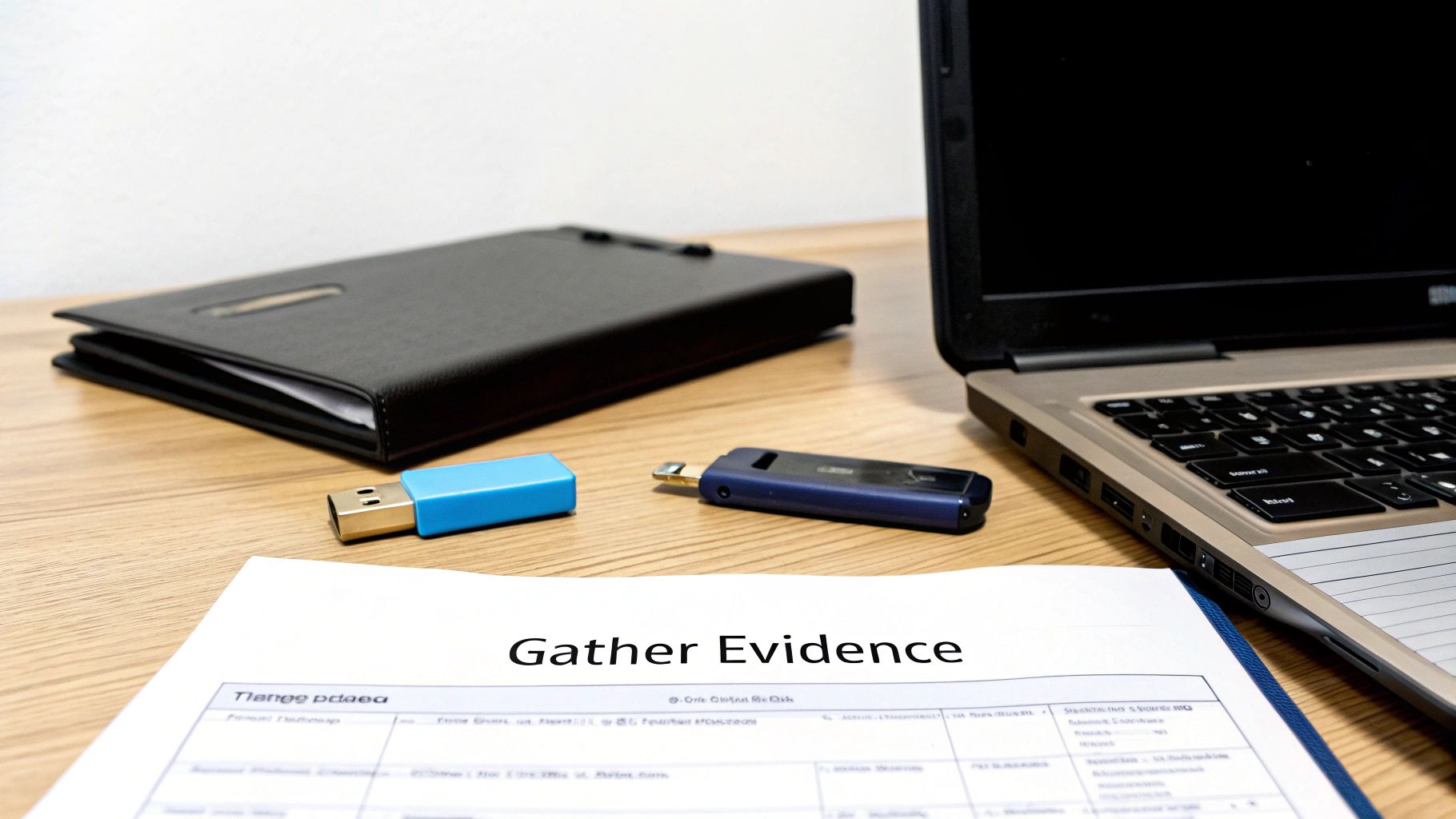
Before you pick up the phone or send that first email to an assets recovery company, the most important work has to be done by you. Honestly, the success of any recovery mission comes down to the quality of the information you can pull together beforehand.
Think of it like this: you're the lead detective on your own case. Every little detail you can dig up, no matter how trivial it seems, could be the one breadcrumb that leads back to your funds.
Doing this homework isn't just busy work. By meticulously gathering every scrap of digital evidence, you give your recovery partner a massive head start. A well-organized file means they can dive right in, saving precious time and focusing their expertise where it counts.
Building Your Digital Case File
First things first: create a secure document and keep it completely offline. Your mission is to collect every shred of information connected to your lost crypto. This goes way beyond the obvious stuff; sometimes, the little details on the periphery provide the most valuable clues.
For instance, remembering the brand and model of the old laptop you used to set up the wallet could hint at default file paths or encryption quirks from that era. Even a fuzzy memory of a password pattern you used to favor can give a recovery expert a solid starting point for a brute-force attack.
The goal is to create a complete dossier of your digital life as it related to that wallet. The more threads you can provide, the more an expert has to pull on. Even a partial seed phrase or a hint about your password structure can slash the recovery time from weeks down to a matter of hours.
Here’s a checklist of the absolute essentials to gather:
- Wallet Info: The name of the wallet software (like MetaMask, Exodus, or Bitcoin Core), its version number if you happen to know it, and of course, the type of cryptocurrency.
- Addresses & IDs: Your public wallet addresses and any transaction IDs (TxIDs) you can find. Sift through old emails or exchange histories for these.
- Password Clues: Jot down any password or passphrase you might have used. This includes common variations you use, old patterns, or even just fragments you remember. Don’t filter anything out.
- Seed Phrase Remnants: Write down every single word from your recovery phrase you can recall, even if you know they're out of order. If you remember the original length (12, 18, or 24 words), that’s a huge help.
Reconstructing Your Tech History
Next up, let's think about the environment—the actual hardware and software you were using when the wallet was created and last accessed. This context is a goldmine for recovery specialists, but it's something people almost always forget.
These details help an assets recovery company dramatically narrow down the search.
Try to answer these questions to jog your memory:
- What computer was it? Think about the operating system (Windows 7, macOS Mojave) and the model (e.g., Dell Inspiron 15, 2014 MacBook Pro). Was it a spinning hard drive or an SSD?
- Where did you save things? Did you use cloud storage like Dropbox or Google Drive? An external hard drive? Maybe a specific USB stick you always used?
- What was your security like back then? Were you running a particular antivirus program? Did you use a password manager? These tools can sometimes interact with wallet files in unexpected ways.
This information builds a timeline and paints a much clearer picture for the technical team. It’s the difference between telling them to find a needle in a haystack and telling them exactly which corner of the barn to search.
Locking Down Your Data
As you compile all this, remember that you’re creating an incredibly sensitive document. It literally holds the keys to your financial kingdom.
Never share this complete file with anyone over insecure channels. That means no email attachments or instant messages. Period.
When you do find a reputable firm, they will have a secure, encrypted way for you to share this data. For now, your job is to keep it safe on an encrypted, offline device—like a password-protected USB drive. Getting your house in order like this is the first, most powerful step you can take on your road to recovery.
How to Vet and Select the Right Recovery Partner
Choosing the right partner for your recovery is the most important decision you'll make. This is the moment you shift from being a victim to being a proactive investigator. Your job is to carefully separate the genuine experts from the predatory scammers who prey on distress.
This isn't just about finding a company; it's about finding a trustworthy ally with the technical chops and ethical backbone to handle your case securely.
Your evaluation should really boil down to three things: their technical skill, their security protocols, and how they get paid. A legitimate firm will be an open book on these points. A scam, on the other hand, will be evasive, pushy, and almost always ask for money upfront.
First Impressions and Technical Know-How
A professional assets recovery company kicks things off with a consultation, not a sales pitch. They should be asking you a lot of probing questions about your situation—what kind of wallet it is, the last time you had access, and what info you've managed to pull together.
This initial conversation is your first real chance to see if they actually know what they're talking about.
They need to show clear, specific experience with your exact problem. For instance, if you're locked out of a Trezor hardware wallet, they should be able to discuss the specific firmware versions and potential attack vectors they'd explore. If it's a corrupted wallet.dat file from an old Bitcoin Core client, they should understand the unique complexities of that file structure. Vague, generic answers are a massive red flag.
The key takeaway here is that genuine experts focus on the "how," not just the "what." They'll walk you through their methodology in a way you can actually understand, detailing the technical steps instead of just making broad promises.
Legitimate firms are making a real dent in the fight against crypto crime, often working with law enforcement and offering things like free case audits without asking for a dime. For example, reputable firms have been observed accepting around 67% of consultation cases, which shows they have a realistic and thorough vetting process of their own. This is a world away from scam operations that promise the moon, guarantee results, and demand payment before lifting a finger.
Breaking Down the Fees and Security
This is where the difference between a real service and a scam becomes night and day. A trustworthy assets recovery company almost always works on a contingency-based fee. You might hear it called a "no win, no fee" model.
Plain and simple, this means they only get paid a percentage of the recovered assets after the job is done and you have your funds back. Their success is tied directly to yours.
On the flip side, any demand for an upfront "diagnostic fee," "processing fee," or "tax payment" is the biggest red flag you can possibly find. Scammers use these bogus fees to bleed you dry with zero intention of ever recovering anything.
Just as critical are their security practices. During your initial talk, you need to ask some hard questions about how they'll handle your private information:
- How will I securely send my information to you? They should have an encrypted portal or secure transfer method, not just ask you to attach it to an email.
- Who on your team gets to see my case file? Access should be strictly limited and on a need-to-know basis.
- What happens to my data after the case is closed? Whether they succeed or not, they need a clear policy for securely destroying your sensitive information.
A professional firm will welcome these questions and have solid, reassuring answers. Getting a handle on their security is just as important as confirming their technical skills. For a deeper look at what separates the pros from the cons, check out our guide on what to look for in a crypto recovery expert.
Vetting Your Assets Recovery Company Checklist
When you're stressed and desperate, it’s far too easy to miss the warning signs. It helps to have a clear, objective checklist to keep you grounded. Use this table to compare what you're seeing with the hallmarks of a trustworthy firm versus a suspicious one.
| Characteristic | Green Flag (Trustworthy) | Red Flag (Suspicious) |
|---|---|---|
| Payment Model | Success-based fees only. They get paid a percentage after you regain access to your funds. | Any upfront fee. They demand payment for "taxes," "tools," or "diagnostics" before starting. |
| Communication | Professional and patient. They answer all your questions clearly and manage your expectations realistically. | High-pressure tactics. They create false urgency, rush you into decisions, or use overly emotional language. |
| Guarantees | No guarantees. They talk in terms of probabilities and will be honest about the chances of success. | Guaranteed success. They promise a 100% recovery rate, which is impossible to guarantee. |
| Online Presence | Verifiable track record. They have a professional website, case studies, and a clear physical address or business registration. | Anonymous or vague identity. They operate through social media DMs, have a generic website, and lack verifiable credentials. |
By systematically running any potential partner through these checks, you can cut through the noise. It lets you move forward with confidence, knowing you’ve chosen a capable and ethical firm to help you reclaim what’s yours.
A Look Inside the Crypto Recovery Process
So you've done your homework and found a recovery company you trust. Now what? This is where the real work begins, shifting from vetting to the actual recovery effort. It’s less of a black box and more of a methodical, highly secure workflow where technical wizards get to work on your specific problem.
Everything kicks off with a detailed, and more importantly, secure consultation. This isn't just a quick phone call. Think of it as a forensic interview. The recovery specialists need to gather every scrap of information you have. They'll set up an encrypted channel for you to send over your files and notes, making sure your sensitive data is locked down from the very first moment.
First Up: Analysis and Game Plan
Once your information is securely in their hands, the technical team starts digging in. They’re not just glancing at the wallet type. They’re looking at its entire history, the kind of tech that was common when it was created, and dissecting every clue you gave them about old passwords or the hardware it lived on. This whole stage is about building a custom-tailored strategy for your case.
Let's be real: trying to crack a forgotten password for an ancient wallet.dat file from an old Bitcoin Core client is a completely different beast than trying to pull data from a corrupted hardware wallet. The first job calls for a smart, targeted brute-force attack. The second might mean physically desoldering a memory chip in a cleanroom environment. The team maps out the most likely routes to success before they even think about running a single recovery attempt.
This is the end goal of the vetting process you just completed.
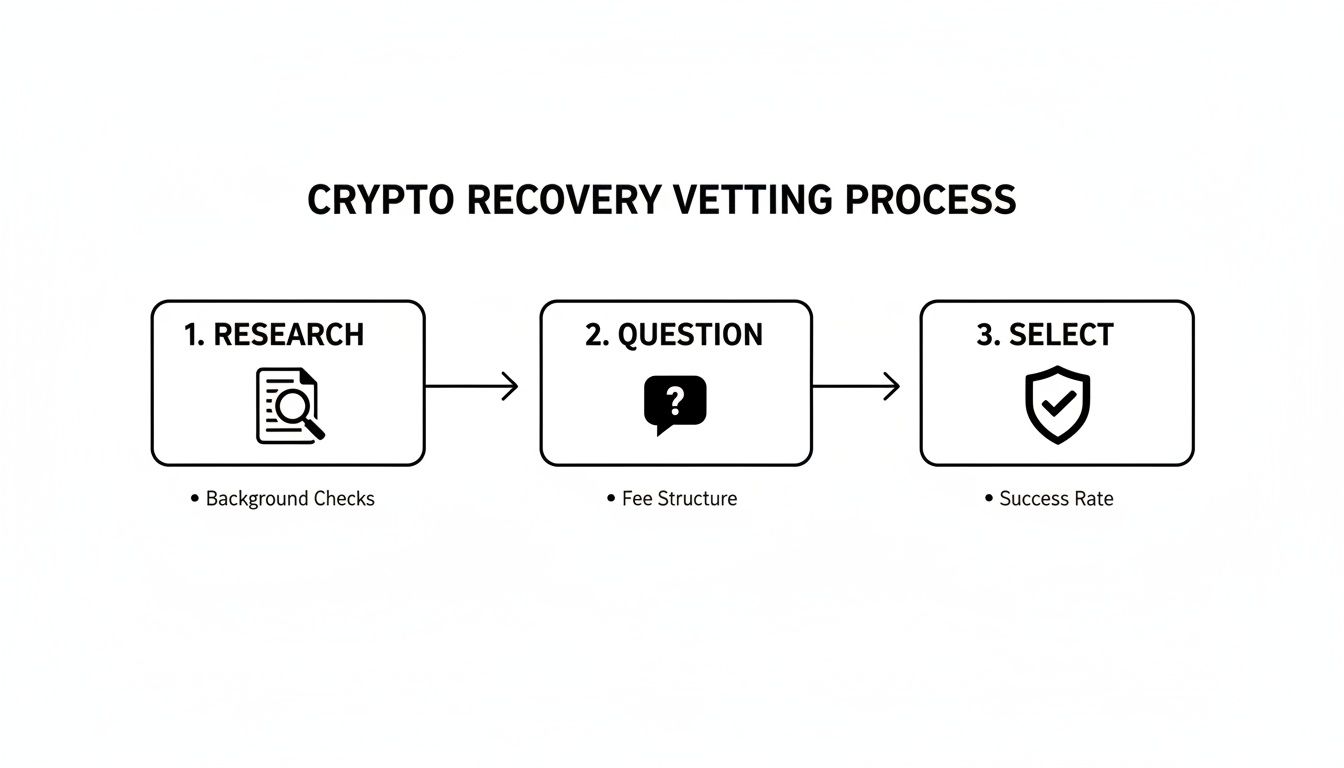
That simple "Research, Question, Select" flow is what gets you to a team capable of handling this kind of complex work.
The Nitty-Gritty: Technical Recovery
This is the heart of the operation. Specialists bring out the big guns—their proprietary software, powerful hardware, and years of experience. How long this takes can vary wildly, which directly affects the timeline.
Here’s a glimpse of what that might look like in the real world:
- Cracking Passwords: This is where raw power meets intelligent guesswork. Specialists use clusters of high-end GPUs to churn through billions of password combinations per second. Your hints about old pet names or favorite numbers are pure gold here; they can slash the search time from years to days.
- Fixing Corrupted Files: Got a damaged
wallet.datfile? The team performs what is essentially digital surgery, carefully repairing the file's structure to extract the private keys hidden inside the garbled data. - Handling Busted Hardware: If your Ledger or Trezor got physically wrecked, the process can get intense. It might involve taking the device apart, de-soldering the memory chip, and reading the raw data directly in a controlled lab.
- Rebuilding Seed Phrases: If you have most of your seed phrase words but are missing one or two, experts use specialized algorithms to test all the valid combinations and checksums until they nail the correct sequence.
Throughout all of this, any professional assets recovery company maintains iron-clad confidentiality. Your case files are kept in a digital silo, with access limited to the handful of technicians working directly on your recovery.
How Long Is This Going to Take?
It's the million-dollar question, and it's vital to have realistic expectations. A straightforward password recovery where you've provided solid clues could be over in a few days. But more tangled cases can easily stretch into weeks or even months. Imagine trying to access a deceased relative's crypto—you're not just fighting a technical battle, you're also navigating a legal maze, which adds a lot of time.
A good firm will be upfront about this from day one. They'll give you a realistic timeline based on your specific situation, not some pie-in-the-sky promise of instant results.
The success of these attempts often comes down to the quality of the tools being used. And the results can be impressive. Some of the best firms have achieved a 98% success rate across more than 10,000 cases, bringing back hundreds of millions of dollars for their clients. That’s far from the industry average, and it's made possible by advanced tech like AI-powered blockchain analysis.
The Final Hand-Off: Getting Your Crypto Back
When they crack it, the final phase is all about securely returning your assets. The company will guide you in setting up a brand-new, completely secure wallet. They should never ask for the keys or seed phrase to this new wallet. Period.
Once you're set up, they'll transfer the recovered funds directly to you. Only after you’ve confirmed you have the crypto and are in full control does their fee become due. This is the "no win, no fee" model in action, proving their interests are aligned with yours right up to the finish line.
The last step? They securely wipe all of your case data from their systems, closing the book on a successful and confidential recovery. The right crypto recovery software and a team of true experts are what make this entire process work.
So, you're considering bringing in a professional to help recover your assets. Smart move. But before you dive in, it's absolutely critical to understand the practical side of things. Let's talk about what this process really looks like in terms of cost, how long it might take, and what a "good" success rate actually means.
Getting a handle on this stuff upfront protects you from unrealistic promises and helps you see what a successful recovery is actually worth.
How Reputable Firms Structure Their Fees
One of the biggest tells of a trustworthy firm is how they handle their billing. The gold standard in this industry is a contingency-based fee structure. You might hear it called a "no win, no fee" or "success-based" model, but it all means the same thing: they only get paid if they get your assets back.
Think about it—this approach perfectly aligns their goals with yours. It shows they're confident enough in their own skills and technology to invest their time and resources into your case without asking for a dime upfront. If a company isn't willing to bet on themselves, why should you?
So, how does it work? When the recovery is successful, their fee is simply a percentage of the total value recovered. That percentage isn't a flat rate; it can shift based on a few key things:
- Case Complexity: A straightforward password recovery for a common wallet is a different beast than a complex case involving, say, a physically damaged hardware wallet that needs forensic lab work. The latter will naturally have a higher fee.
- Value of the Assets: Some firms use a sliding scale. The higher the value of the recovered crypto, the lower the percentage they take.
- Resources Needed: If your case requires a massive amount of computational power for brute-forcing passwords or deep blockchain analysis, the fee will reflect those significant operational costs.
Generally, you can expect contingency fees to be somewhere in the 10% to 30% range. Just make sure this is all laid out clearly in a service agreement before you commit to anything.
Quick tip: If any company asks for an upfront payment to cover "taxes," "software," or "processing fees," run. A legitimate assets recovery company earns its keep from a successful outcome. Full stop.
Let's Be Realistic About Timelines
Everyone wants to know, "How long will this take?" It's a fair question, but the honest answer is always, "It depends." The timeline is completely dictated by the unique details of your situation. A simple recovery could be wrapped up in a few days, while a more tangled mess might take weeks or even months.
For instance, a case where you remember several solid password hints can often be cracked pretty quickly with targeted brute-force attacks. On the flip side, trying to get into a deceased relative's poorly documented wallet involves not just technical puzzles but often legal ones, too. That will naturally stretch things out.
A true professional will be upfront and manage your expectations from the start. They’ll give you a realistic estimate based on their initial look at your case, not a pie-in-the-sky delivery date. Be very skeptical of anyone who promises a lightning-fast recovery before they even know what they're dealing with.
What Success Rates Actually Mean
Finally, let's talk about success rates. Here’s the hard truth: in the world of asset recovery, there are no 100% guarantees. Any company claiming they have a perfect track record is not being honest with you. The nature of this work means navigating a lot of unknowns, and sometimes, recovery just isn't in the cards.
A real expert will be straight with you about the probability of success for your specific case. They'll talk about likelihoods based on their experience with similar situations. Top-tier firms often hit impressive success rates—sometimes over 90% for certain types of cases—but they will never, ever present that as a certainty.
Choosing the right assets recovery company comes down to finding a partner who is transparent about costs, realistic about timelines, and honest about the odds. That clarity is what builds trust and ensures you’re making the right call.
Frequently Asked Questions About Asset Recovery
Even after walking through the steps, you're bound to have some questions. It's completely normal when you're dealing with something as high-stakes as lost assets. Let's tackle some of the most common concerns we hear from people in your exact position.
My goal here is to give you direct, clear answers so you can feel confident about what comes next. Think of this as the final check-in before you move forward with a professional assets recovery company.
How Do I Securely Share My Wallet Information?
This is probably the most important question you can ask, and the answer immediately separates the pros from the predators. You should never, under any circumstances, send things like password clues, parts of a seed phrase, or wallet files through regular email or a chat app.
A legitimate recovery service will always give you a secure, end-to-end encrypted way to upload your information. This usually looks like a dedicated client portal on their website or a specialized file transfer service. If anyone tells you to just "email it over," that’s a massive red flag. Hang up the phone, close the chat, and walk away.
What Happens if the Recovery Attempt Fails?
While the best services have impressive success rates, there's never a 100% guarantee in this line of work. The critical thing to confirm before you start is the payment model. A trustworthy assets recovery company will always work on a contingency basis, often called "no win, no fee."
This is non-negotiable. It means that if they can't get your funds back, you don't owe them a dime. Their success is tied directly to yours. Any company that wants money upfront, regardless of the outcome, isn't a partner—they're a liability.
How Long Does the Asset Recovery Process Take?
There’s no magic number here, and you should be very skeptical of anyone who promises a lightning-fast turnaround before even looking at your case. The timeline can swing wildly depending on the details.
Here’s a rough idea of what to expect:
- Simple Cases (Days to a Week): If you've got a really good password hint or you're just missing a word or two from a seed phrase, a focused brute-force attempt might crack it pretty quickly.
- Complex Cases (Weeks to Months): For situations involving corrupted wallet files, damaged hard drives, or cases where you have very little information to start with, the process is much more involved. This requires deep forensic work and can take a good deal of time to get right.
A reputable service will give you a realistic estimate only after they've done an initial assessment, and they'll keep you in the loop as they make progress.
Is It Possible to Recover Funds from Scams?
This is a totally different ballgame. Trying to get back funds you sent to a scammer is not the same as unlocking a wallet you own. The job shifts from technical password recovery to intense blockchain forensics, and it almost always involves getting law enforcement involved.
While some specialized firms can trace where the stolen funds went on the blockchain, the odds of actually getting that money back are unfortunately very low. Why? Because the funds are actively controlled by a criminal, not just locked away behind a password you forgot.
Be extremely careful with any assets recovery company that makes big promises about clawing back stolen funds. This is a favorite tactic of "recovery scammers" who prey on victims a second time. It's an incredibly difficult process, and success is never a sure thing.
Feeling overwhelmed by the search for a trustworthy partner? Let Wallet Recovery AI simplify the journey. We use a secure, AI-driven approach to help you regain access to your crypto assets with the privacy and expertise you deserve. Start your confidential recovery process with us today.
Leave a Reply